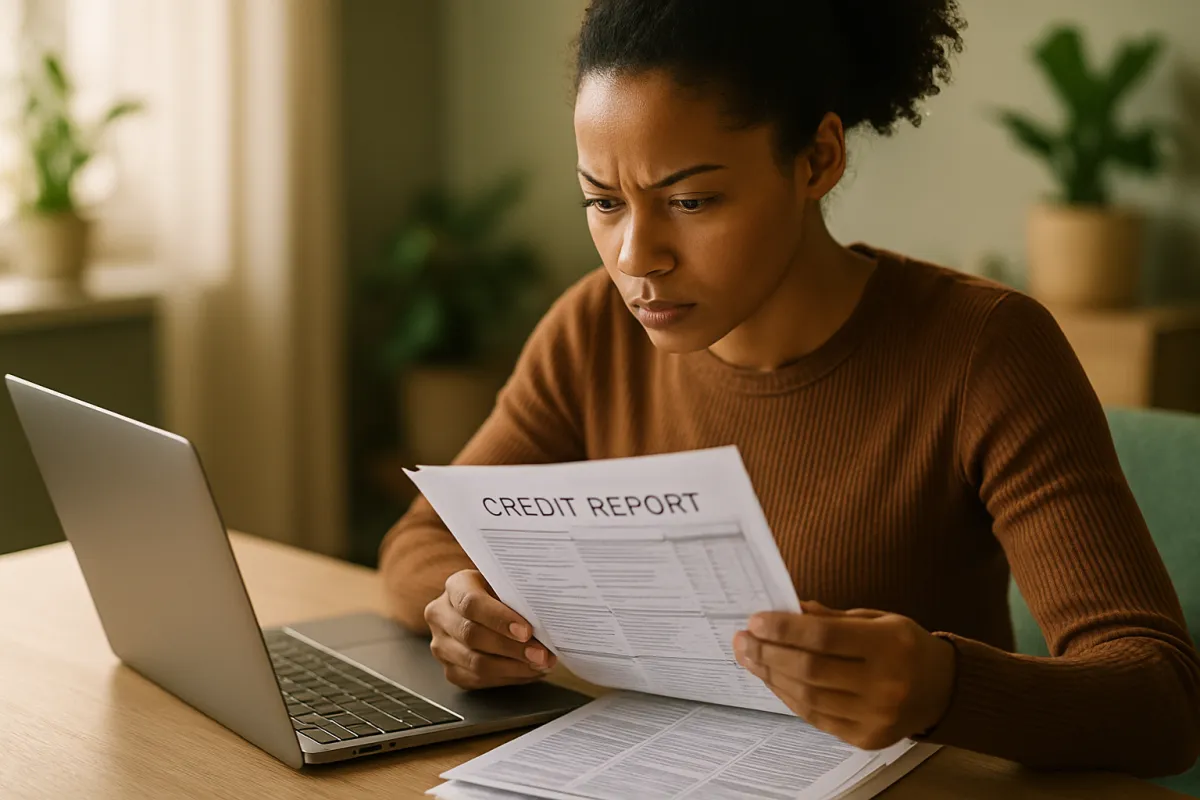
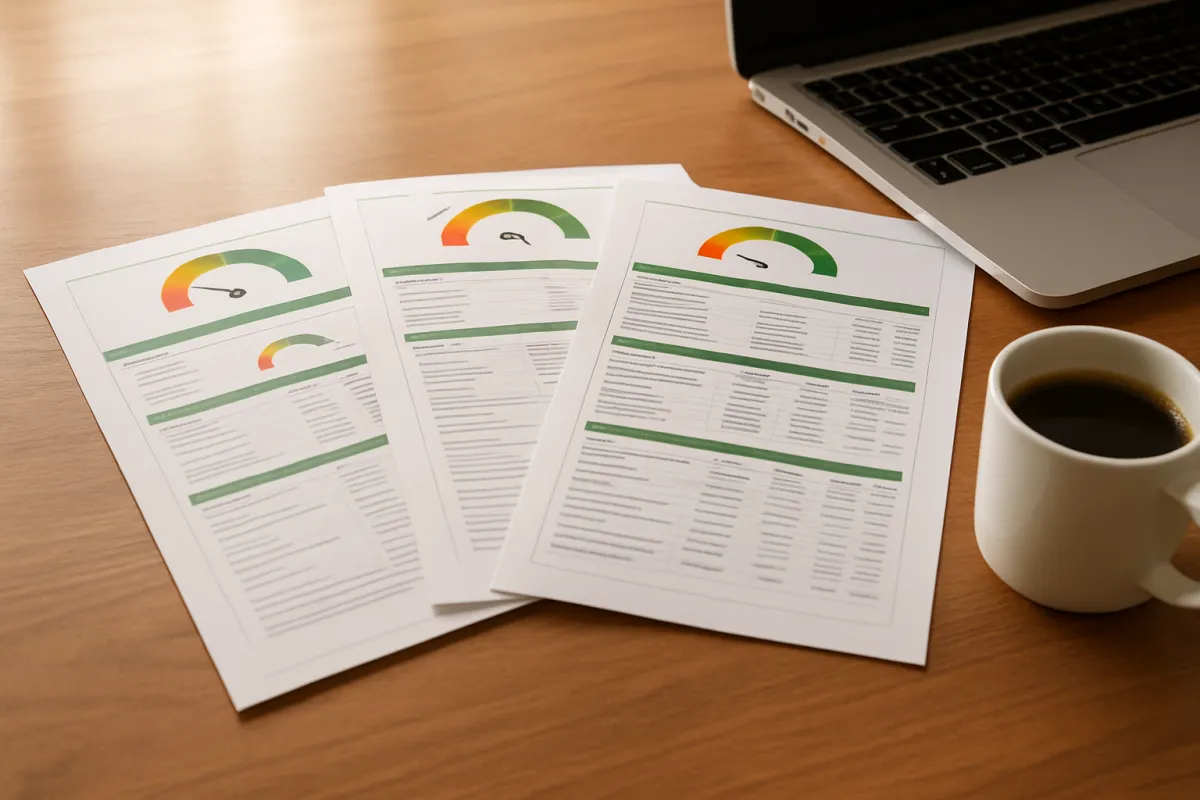
This rundown walks you through how to read your credit report section by section, from your identifying details to accounts, inquiries, and collections.
BLWritten byEditorial team
Edited byHamza Hai, MBA
·30 min readReviewed
Short answer: Read your credit report in seven sections: get all three reports from the official free source, verify your identifying information, read each account or tradeline, review the inquiries, check public records and collections, understand what is deliberately left off, including your score, then flag anything wrong to dispute and anything you do not recognize as possible fraud. Checking your own file is a soft inquiry that never affects your score.
Short answer: Read your credit report in seven sections: get all three reports from the official free source, verify your identifying information, read each account or tradeline, review the inquiries, check public records and collections, understand what is deliberately left off, including your score, then flag anything wrong to dispute and anything you do not recognize as possible fraud. Checking your own file is a soft inquiry that never affects your score.
Your credit report is one of the most important documents in your financial life, and it is also one of the least read. Lenders use it to decide whether to approve you and at what rate, landlords check it before handing over keys, and in some cases an insurer or an employer may look at a version of it too. Yet most people only glance at their report when something has already gone wrong, and even then they are not quite sure what they are looking at. The rows of accounts, the codes, the inquiries, the dense personal-information block at the top: it can feel like a document written for someone else. It was not. It is a record of you, and once you know how it is laid out, you can read it in one focused sitting.
This rundown walks you through how to read your credit report in seven clear sections, in the order that makes the whole thing click into place: get all three reports, verify your identifying information, read your accounts, review the inquiries, check public records and collections, understand what is deliberately left off, and finish by spotting errors and knowing your next move. Along the way you can run your own file through the companion beside this article, and where a section touches the number that lenders care about, we point to our rundown on how credit utilization works. One honest note up front: everything here describes how reports and your rights generally work, not advice for your specific situation, and any figure is illustrative rather than a promise.
Key takeaways
A credit report is organized into a few predictable sections: your identifying information, your accounts (tradelines), inquiries, and public records or collections. Read them in order and the document stops feeling random.
You have a right to your reports from all three nationwide bureaus at no cost through the official source, and checking your own file is a soft inquiry that never affects your score.
Your credit score is not on the report itself. The report is the underlying record; the score is a number calculated from it, so read the report to make sure the facts are right.
Read all three reports side by side, because lenders do not always report to every bureau and an error can appear on one file and not the others.
Reading well is really about catching two things: information that is wrong (an error to dispute) and information you do not recognize (a possible sign of fraud).
Why your credit report is worth reading closely
Before the steps, it helps to know why a careful read pays off, because the reason shapes what you look for. A credit report is not just a passive record; it is the raw material a scoring model turns into the number lenders use. When the report is right, the score is a fair reflection of how you have handled credit. When the report is wrong, the score is unfair, and you are the one who pays for it in a higher rate or a declined application until you fix it. Reading the report is how you check the raw material before it gets scored.
It also helps to know which parts of the report carry the most weight, so you can spend your attention where it matters. Scoring models are often described in terms of a handful of factors drawn straight from your report, and those factors are not equal. The chart below shows the commonly cited weightings, illustrative but widely referenced, so you can see which sections deserve the closest read.
What is on your credit report, by scoring weight (illustrative)
Commonly cited weightings of the factors a scoring model draws from your report. Illustrative and widely referenced rather than exact for any one model. Bar widths are drawn from each value against the largest.
Payment history35%
Amounts owed and utilization30%
Length of credit history15%
New credit and inquiries10%
Credit mix10%
These shares are the commonly cited FICO-style weightings, illustrative and used here to show priority rather than to describe any single model exactly. The lesson is the ranking: payment history and amounts owed dominate, so the accounts section, where both of those live, is the part of your report to read most carefully.
Read that chart as a map of where to look hardest. The two tallest bars, payment history and amounts owed, both come from the accounts section of your report, which is why Step 3 gets the most attention below. Length of history, new credit, and credit mix all matter, but a wrong late mark or a wrong balance sits right on top of the two biggest factors, so those are the errors most worth catching. Our rundown on how to raise your credit score picks up once you know the report is accurate.
Before you start: what you need
Reading your report well is mostly about being organized and unhurried, so a few minutes of setup makes the whole thing go faster and keeps you from missing something. Gather these before you begin, and you can move through all seven sections in one focused sitting.
All three of your credit reports. You are entitled to free copies from the three nationwide bureaus through the official federally authorized source. Pull all three, because lenders do not always report to every bureau, so an account or an error can appear on one report and not the others.
Your own records to check against. A rough list of your open accounts, their lenders, and roughly what you owe, plus any recent statements. You are comparing the report against reality, so it helps to have reality handy.
A way to make notes. A notepad or a document where you can jot anything that looks wrong or unfamiliar, with the bureau it appears on. That list becomes your action plan if you find an error or a sign of fraud.
An unhurried hour. Reading three reports carefully is not hard, but it rewards patience over speed. Give yourself time to read rather than skim.
Time to read: about an hour to work through all three reports section by section the first time, and less once you know the layout. Difficulty: genuinely manageable, because a report follows the same predictable structure every time, and the skill is mostly knowing what each section means and what a healthy entry looks like. Cost: nothing, because your reports are free and checking them never touches your score. With your three reports open, your own records beside them, and a place to note anything odd, the seven sections below take you from the top of the file to the bottom without anything slipping past. You can also run your accounts and any negative marks through the companion to get a section-by-section reading order tuned to your file.
Step 1: Get all three reports for free
You cannot read what you do not have, so the first move is to get your actual credit reports from all three nationwide bureaus, Equifax, Experian, and TransUnion. You have a right to your file, and the official, federally authorized way to get your reports for free is through AnnualCreditReport.com, the single source set up for this purpose. Avoid lookalike sites that attach a subscription or a fee, because you never need to pay to see your own reports. Request all three rather than just one, since the bureaus keep separate files and an account or an error on one is often absent from the others.
Pull all three at once so you can read them side by side. Reading them together is what reveals a mismatch: an account showing a past-due mark on one report but current on another is a strong signal that at least one of them is wrong, and an account that appears on only one report is worth a second look. As each report opens, resist the urge to hunt for problems immediately. Instead, get oriented: notice the sections in order, your identifying information, then your accounts with their balances and payment histories, then the inquiries, then any public records and collections. Knowing the layout before you read makes the actual reading in the later steps far faster and less overwhelming.
The watch-out here is convenience traps and the score upsell. Checking your own reports is a soft inquiry and never costs you a single point, so there is no downside to looking, but there is a downside to looking in the wrong place: sites that mimic the official source can sign you up for paid monitoring you did not want. There is also a common mix-up to sidestep now: the free report shows the information but not a score, and the two are different things, covered in Step 6. Use the official source, decline the upsells, and save or print each report so you have a dated snapshot of exactly what was on file the day you read it. That snapshot is your baseline for everything that follows.
Step one is simply getting all three reports in front of you. Pulling them together lets you read bureau against bureau, which is often how a missing account or an error first shows itself.
Step 2: Verify your personal and identifying information
With your reports open, start at the top, where the identifying information lives. This section usually lists your name and any variations of it, your current and former addresses, your date of birth, and sometimes employers. It looks like the least interesting part of the report, and people tend to skip it, but reading it carefully is one of the fastest ways to catch two serious problems early: a mixed file and identity theft. Both of those announce themselves here before they show up anywhere else, which is why this section comes second, right after you have the reports in hand.
Read each field against what you know to be true. Your name may appear with minor variations, a maiden name, a middle initial, a misspelling, and small harmless variants are common. What matters more is anything you do not recognize at all: an address where you never lived, a name that is close to yours but not yours, an employer you never had. A cluster of unfamiliar personal details can be the first sign that someone else’s information has been mixed into your file, often because of a similar name or a transposed digit in an identifier, or that someone has been using your identity. On its own a single old address is usually nothing; a pattern of unfamiliar identifiers is a flag.
The watch-out is dismissing this section as cosmetic. A wrong address by itself may not move your score, but it can be the thread that, when pulled, reveals accounts that are not yours attached to a file that is not entirely yours. Note anything unfamiliar with the bureau it appears on, exactly as you will for the accounts, and keep going. If the personal information looks clean and matches your history, that is a small but real reassurance that the file is actually yours, and you can move to the accounts with more confidence. If it does not, the troubleshooting section below on mixed files and fraud is where that thread leads.
Step 3: Read the accounts and tradelines
This is the heart of the report and the section worth the most care, because it holds the two factors that most affect a score: your payment history and your balances. Each account here is called a tradeline, and there is one for every credit card, auto loan, mortgage, student loan, or other credit account in your name. A tradeline typically shows the lender, the account type, the date it was opened, the credit limit or original loan amount, the current balance, the account status (open, closed, paid, and so on), and a month-by-month grid of your payment history. Reading a tradeline means checking each of those fields against what you actually know about the account.
Go account by account and ask a short set of questions of each one. Is this account actually mine? Is the balance about right? Is the credit limit correct, since a limit reported lower than it really is can quietly inflate your utilization, the ratio explained in our rundown on how credit utilization works? Is every month in the payment history marked correctly, with on-time payments showing as on time? Is the status right, so a card you closed does not still read as open, and an account you paid off shows a zero balance? Compare the same account across the three reports as you go, because a discrepancy between bureaus is often the clearest sign that one of them is wrong.
The watch-out is reading too fast and treating accurate bad news as an error. A late payment that genuinely happened is accurate and is not something you can dispute away, so the goal is not to challenge every negative mark but to separate the ones that are wrong from the ones that are simply unwelcome. Flag a late mark only if you are confident the payment was on time, a balance only if it truly differs from what you owe, an account only if it is genuinely not yours. Note each real problem with the bureau it appears on. This section takes the longest, and it should, because getting it right is most of the value of reading your report at all.
Each tradeline is one account. Read the limit, the balance, the status, and every month of the payment grid, and compare the same account across all three reports.
Step 4: Review your credit inquiries
After the accounts comes the list of inquiries, the record of who has looked at your report and when. This section confuses people because it lumps together two very different things, and knowing the difference is the whole point of reading it. A hard inquiry, or hard pull, happens when you apply for new credit and a lender checks your report to make a decision, and it can have a small, temporary effect on your score. A soft inquiry happens when you check your own report, when a company pre-screens you for an offer you did not apply for, or during certain account reviews, and it has no effect on your score at all. On many reports the two are listed separately, and only you see the soft inquiries while lenders see the hard ones.
Read the hard inquiries first, because those are the ones that carry weight and the ones that matter for spotting trouble. Go down the list and confirm you recognize each one: a hard pull should line up with an application you actually made, a card, a loan, a lease, a mortgage. Recent hard inquiries you remember making are normal and fade in importance over time. What deserves attention is a hard inquiry you do not recognize at all, because an application you did not make can be an early sign that someone is trying to open credit in your name. Then glance at the soft inquiries, which are mostly harmless pre-screens and your own checks, and move on.
The watch-out is reading the inquiry section with the wrong worry. People often panic about the number of soft inquiries or their own frequent checks, neither of which affects the score, while overlooking the one thing that matters, an unrecognized hard pull. Do not let the volume of pre-screen offers distract you. Focus on whether every hard inquiry maps to something you did, note any that do not with the bureau they appear on, and treat an unfamiliar hard inquiry the same way you would an unfamiliar account: as a possible fraud signal to run down through the troubleshooting steps rather than something to ignore.
Step 5: Check public records and collections
The next section covers public records and collections, the part of the report that carries the heaviest negative items, so even though it is often short, it is worth reading closely. Public records on a credit report today are generally limited to certain bankruptcies, since other public-record items that once appeared have largely been removed from credit files. Collections are accounts a lender has given up on and sold or assigned to a collection agency, and they can also include debts that were originally something other than credit, such as a medical bill that went unpaid and was sent to collections. Because these items weigh heavily, an inaccurate one does outsized damage, which makes accuracy here especially important.
Read each collection and public record with two questions. First, is it accurate: is this really a debt you owe, in the amount shown, with the right dates? Second, is it even yours: a collection you do not recognize at all is either a mistake, sometimes a debt attached to the wrong person, or a possible sign of fraud. Check whether a single debt appears more than once, for example listed by both the original lender and the collector, or by two collectors, because a duplicate can make one debt look like two. Note the date associated with each negative item as well, since negative information generally remains on a report only for a set period before it ages off, and an item that should have aged off but has not is worth flagging.
The watch-out is assuming a collection is untouchable just because it is a collection. Accurate collections are accurate and cannot simply be disputed away, but collections are also a common home for genuine errors: wrong amounts, debts that are not yours, duplicates, and items that should have aged off. Read them as carefully as you read the tradelines, note anything wrong or unfamiliar with the bureau it appears on, and treat a collection you truly do not recognize as a possible fraud flag. If a negative item here is accurate, that is a separate matter of time and paying it down, not of reading the report, but reading closely is how you make sure you are not being dragged down by a mistake.
Inquiries, public records, and collections reward a slow read. The items that matter most are the ones you do not recognize, because an unfamiliar hard pull or collection can be the first sign of fraud.
Step 6: Understand what is not on your report
Reading a report well means knowing what to expect, and part of that is knowing what is deliberately absent, because people waste time hunting for information that was never going to be there and misread the report as a result. The single most important absence is your credit score. The report is the underlying record of your accounts, payment history, inquiries, and public records; the score is a separate number a model calculates from that record. The free report from the official annual source shows the data but not a score, and a score you see through a card issuer or an app is a different product that can vary by model. Read the report to confirm the facts are right, and understand the score simply follows from those facts once they are accurate.
Several other things are usually missing too, and knowing why explains a lot about how reports work. Your income, your bank balances, and your savings generally do not appear, because a credit report tracks how you handle credit, not your overall wealth. Everyday bills like rent, utilities, and phone service usually are not reported unless the account goes to collections or you specifically use a service that reports them. Personal characteristics such as your marital status or medical diagnoses are not part of the file. This is why two people with similar incomes can have very different reports: the report reflects credit behavior, not a full financial picture.
The watch-out is drawing the wrong conclusion from an absence. If your rent history is not there, that is normal, not an error, and disputing its absence gets you nowhere. If your score is not on the report, that does not mean something is wrong; it means you are looking at the record, not the number, and you can get a score separately if you want one. The thing that most affects the score you do eventually see is often utilization, the balance-to-limit ratio in our rundown on how credit utilization works, which is calculated from the balances and limits you already read in Step 3. Knowing what is and is not on the report keeps you focused on checking the data that actually lives there.
Step 7: Spot errors and know your next move
You have now read every section, so the final step is to turn your notes into action, which comes down to sorting what you flagged into two piles. The first pile is genuine errors: information that is factually wrong or incomplete. A payment marked late that you made on time, a balance that is higher than what you owe, a credit limit reported lower than it really is, a closed account showing as open, a debt listed twice, an account or inquiry that is not yours. The second pile is accurate information you may dislike but cannot change through a dispute, such as a late payment that genuinely happened. Only the first pile is actionable through the dispute process, so sorting honestly is what makes your next move effective.
For the errors, you have a clear, free, legally backed path. Under the Fair Credit Reporting Act you have a right to an accurate file and to dispute information that is genuinely wrong at no cost. The short version is to gather a document that proves the correct information, file a dispute with each bureau showing the error, dispute the same item with the lender or collector that reported it, and follow the investigation to its result. Because this deserves its own careful walkthrough, we cover the whole procedure step by step in our rundown on how to dispute a credit report error, from pulling your reports to escalating a denial. You can also run your file through the companion to get a sense of which flagged items to prioritize.
The watch-out is the two failure modes at the end of a good read: doing nothing with what you found, or disputing accurate marks in the hope they vanish. A wrong item left alone keeps costing you, and an error you spotted but did not act on is no better than one you missed. On the other side, challenging accurate history wastes effort, can be dismissed as frivolous, and does nothing for your file. So act on the real errors and let the accurate marks age off on their own schedule. And treat anything you do not recognize at all, an account, an inquiry, a collection, as a possible fraud signal that gets the faster, separate handling in the troubleshooting section rather than an ordinary dispute.
How a credit report is laid out
It helps to picture the whole document as a sequence of sections with a rough sense of how much of the report each one tends to take up, because knowing the shape keeps you from getting lost in the middle. The stacked bar below is an illustrative split of how a typical report divides across its sections, chosen to show the layout and the reading order rather than to measure any one file. Your own report may lean more heavily on one section, more accounts, more inquiries, but the order stays the same top to bottom.
The sections of a credit report (illustrative)
Illustrative split of how a typical report divides across its sections, summing to 100. Chosen to show the layout and reading order, not to measure any specific file.
Personal info 10Accounts and tradelines 55Inquiries 20Records and collections 15
Personal info: your name, addresses, date of birth, and sometimes employers, read in Step 2Accounts and tradelines: every credit account with its limit, balance, status, and payment history, read in Step 3Inquiries: the hard and soft pulls on your file, read in Step 4Records and collections: bankruptcies and collection accounts, read in Step 5
Shares are illustrative, chosen to show that the accounts section is usually the largest and the one that most deserves your time. The lesson is the reading order: work top to bottom, and spend the most attention where the most weight sits, on the tradelines.
The practical takeaway from that shape is where to slow down. The accounts section is usually the biggest and the most consequential, since it holds payment history and balances, so it is worth the largest share of your hour. The personal-information block is small but worth reading, because it flags mixed files and fraud early. The inquiries and the records-and-collections sections are shorter, but they are where unfamiliar items, the fraud signals, most often turn up. Read in order, and let the size of each section roughly guide how long you linger.
A worked example: reading an illustrative report
Make it concrete with one illustrative person, remembering that every detail here is an example to show the mechanics, not a promise about your report. Say Marcus is planning to apply for a mortgage in a few months and decides to read his reports first, which is exactly the right instinct. He pulls all three from the official free source (Step 1), saves a dated copy of each, and gets oriented before hunting for problems. Reading the personal-information block on each (Step 2), he finds his details correct except for one old address he does not recognize on a single bureau. On its own he treats it as minor, but he notes it, because a lone unfamiliar address is a thread worth remembering if anything else looks off.
He moves to the accounts (Step 3), the longest part. Going tradeline by tradeline, he confirms his three cards, his auto loan, and his student loans are all his, with balances roughly matching his statements. Then two things stand out. On one card, a month he is certain he paid on time is marked 30 days late on a single bureau, while the other two show it current, that discrepancy between bureaus is his strongest clue it is an error. And on the same bureau that carried the odd address, he sees a small collection account he does not recognize at all. He notes both with the bureau each appears on: the late mark as a probable error to dispute, the unfamiliar collection as a possible fraud signal to run down separately.
Reading the inquiries (Step 4), Marcus recognizes every hard pull except one, an application to a store card he never made, again on the same bureau. Now the pattern is unmistakable: an unfamiliar address, an unfamiliar collection, and an unfamiliar hard inquiry all clustered on one file point toward possible fraud rather than a simple mistake. He checks the public records and collections section (Step 5) once more to be sure he has caught every unfamiliar item, confirms his score is not on the report and does not go looking for it there (Step 6), and sorts his notes (Step 7). The wrong late mark goes in the dispute pile and heads to our dispute rundown. The cluster of unrecognized items goes on the faster fraud track in the troubleshooting section. Nothing about reading his report required an expert; it required reading each section in order and taking his notes seriously. You can run your own version through the companion, and no two reads turn up the same things.
Common mistakes when reading your credit report
Most people who read their report and still miss something do not miss it because reading is hard; they miss it because of a handful of avoidable habits. Steering clear of these matters as much as reading in the first place.
Only checking one bureau. The three bureaus keep separate files, and lenders do not always report to all of them, so an account or an error can sit on one report and not the others. Reading only one means you never see the mismatches that are often the clearest sign of a problem. Pull all three and read them side by side.
Ignoring the difference between soft and hard inquiries. Panicking over soft inquiries or your own frequent checks, which do not affect your score, while overlooking an unfamiliar hard pull, which can signal fraud, is worrying about the wrong thing. Focus on whether every hard inquiry maps to an application you made.
Confusing the report with the score. Looking for a score on the report, or assuming the report is wrong because no score appears, misreads the document. The report is the record; the score is calculated from it and shown separately. Read the report to check the facts.
Missing a mixed file. Skipping the personal-information block as cosmetic means missing the earliest sign that someone else's data, or a fraudster's, has been attached to your file. Read the names, addresses, and identifiers, and treat a cluster of unfamiliar ones as a real flag.
Not checking annually. Reading your report only when something has already gone wrong lets errors and fraud sit for months, where they do the most damage and are hardest to unwind. Reading at least once a year, at no cost and no score impact, catches problems while they are small.
Skimming the accounts section. The tradelines hold the two biggest scoring factors, so rushing through them is where the costliest errors hide. Read the limit, balance, status, and payment grid on each account, and compare across bureaus.
The thread running through these mistakes is reading too narrowly or too fast. When you pull all three reports, read every section in order, know which items actually matter, and do it on a regular schedule rather than in a panic, you catch the things a quick glance always misses.
Troubleshooting: odd reports, freezes, thin files, and fraud
Not every read is straightforward, so here is how to think about the situations that throw people. Treat these as general principles rather than advice for your specific case, and bring in a professional when the stakes are high.
What if the whole report looks wrong or unfamiliar? If large parts of the report do not match your life, accounts you never opened, addresses you never lived at, a name that is close to but not yours, you may be looking at a mixed file, where someone else’s information has been merged into yours, often because of a similar name or a shared identifier. Do not assume you are reading the wrong document. Note every unfamiliar item with the bureau it appears on, and treat it as a serious error to sort out through the dispute process, keeping careful records, because mixed files can be stubborn to separate.
What if my credit is frozen? A credit freeze restricts access to your report so new creditors cannot pull it, which is a strong protection against fraud, but it does not stop you from getting and reading your own report. You can still pull your free reports and read them normally, and you can lift the freeze temporarily when you are ready to apply for new credit, then reinstate it. If you tried to apply for something and were unexpectedly declined, a freeze you forgot about is one ordinary explanation worth checking before you assume the report itself is the problem.
What if my report is nearly empty (a thin file)? If you have little or no credit history, your report may show only a few accounts or almost nothing, which is called a thin file. This is not an error; it simply means you have not used much credit yet. There is nothing to dispute, and the fix is building history over time rather than reading the report differently. A thin file reads quickly precisely because there is little on it, and the useful move is to focus on establishing and maintaining accounts that report, then reading the report again once there is more to see.
What are the signs of identity theft on a report, and what do I do? The tell is a cluster of things you do not recognize: an account you never opened, a hard inquiry for an application you never made, a collection for a debt that is not yours, an unfamiliar address. One unfamiliar item can be an ordinary error; a pattern of them points toward fraud. Handle it on a faster, separate track from an ordinary dispute: dispute the fraudulent items with each affected bureau, consider placing a fraud alert or a credit freeze so no new accounts can be opened in your name, and report the identity theft through the official government channel so you have documentation. Because the stakes and the paperwork are higher, moving quickly and keeping careful records matter most here.
Your credit-report reading checklist
Save this and work down it as you read.
Pull all three of your credit reports from the official free source and save a dated copy of each.
Get oriented on the layout of each report before you start hunting for problems.
Read the personal-information block and flag any name, address, or identifier you do not recognize.
Go account by account through the tradelines, checking the limit, balance, status, and payment history on each.
Compare the same accounts across all three reports and note any mismatch between bureaus.
Read the hard inquiries and confirm each one maps to an application you actually made.
Read the public records and collections, checking each item for accuracy, duplicates, and whether it is even yours.
Remember what is not there: your score, your income, and most everyday bills are separate from the report.
Sort what you flagged into genuine errors and accurate marks, and act only on the real errors.
Treat any cluster of unrecognized items as a possible fraud signal and handle it on the faster track.
Put a reminder on your calendar to read your reports at least once a year.
The bottom line
Reading your credit report is not a specialist skill; it is a short, repeatable habit once you know the document is built from the same predictable sections every time. Get all three reports so you can read bureau against bureau, verify your identifying information at the top, read the accounts closely because that is where payment history and balances live, review the inquiries with an eye for the hard pulls you do not recognize, check the public records and collections for accuracy and for anything that is not yours, remember that your score and your income are not on the report at all, and finish by sorting what you found into real errors to act on and accurate marks to let age off. The whole read takes about an hour the first time and less after that, it costs nothing, and it never touches your score. What it buys you is control: the chance to catch a wrong late mark before a lender sees it, to spot a sign of fraud while it is small, and to make sure the number that shapes your borrowing is built on facts that are actually true. Every figure here is illustrative, and how any of it applies to your file depends on your own facts, but the direction is dependable: read all three, read in order, and act on what is genuinely wrong.
A closing word on how to read this rundown: BorrowLane writes to explain how credit reports and your rights under the Fair Credit Reporting Act generally work, not to give you legal, credit, or financial advice for your own situation. Every figure and share above, including the commonly cited scoring weightings in the first chart, the illustrative section split in the second, and Marcus’s report, is illustrative and chosen to show how the document is structured and read, and how any of it applies to you depends on your specific file, the bureaus and lenders involved, and the current rules, which can change over time. Naming AnnualCreditReport.com and the three nationwide bureaus is descriptive, not an endorsement or a claim of affiliation. Before you act on an error, respond to a possible fraud signal, or decide whether to involve a professional, confirm the current process and your options, keep your own records, and consider speaking with a qualified consumer-rights attorney or a reputable nonprofit credit counselor who can weigh your whole situation.
Frequently asked questions
How do I read my credit report for the first time?
Start by getting all three of your reports from the official free source, then read each one section by section rather than skimming the whole thing at once. A report is generally organized into identifying information, your accounts (also called tradelines), inquiries, and any public records or collections. Take the sections in that order, confirm each part matches what you know to be true, and note anything that surprises you. Reading one section at a time, with the three reports side by side so you can compare them, turns an intimidating stack of pages into a short checklist you can work through in one sitting.
What is a tradeline on a credit report?
A tradeline is simply an entry for one credit account, such as a credit card, an auto loan, a mortgage, or a student loan. Each tradeline typically shows the account type, the name of the lender, when it was opened, the credit limit or original loan amount, the current balance, the payment status, and a month-by-month payment history. Reading a tradeline means checking each of those fields against what you know: is the balance right, is the limit right, is every month marked as paid on time when it was paid on time. Because payment history and balances are the parts of your file that most affect a score, the tradelines are the section worth reading most carefully.
What is the difference between a hard and a soft inquiry?
A hard inquiry, sometimes called a hard pull, happens when you apply for new credit and a lender checks your report to make a lending decision, and it can have a small, temporary effect on your score. A soft inquiry happens when you check your own report, when a lender pre-screens you for an offer, or in certain account reviews, and it does not affect your score at all. On your report, only you see the soft inquiries, while hard inquiries are visible to lenders. When you read the inquiry section, the ones worth attention are hard inquiries you do not recognize, because an application you did not make can be a sign of fraud.
Does my credit score show up on my credit report?
No, and this trips up a lot of people. Your credit report is the underlying record of your accounts, payment history, inquiries, and public records, while your credit score is a number calculated from that data by a scoring model. The free report you pull from the official annual source shows the information but not a score. You may see a score through a card issuer, a bank, or a monitoring service, but that is a separate product, and different models can produce different numbers from the same report. Read the report to check that the facts are right; the score follows from those facts once they are accurate.
How often should I check my credit report?
A common rule of thumb is to review all three of your reports at least once a year, and spreading them out, for example pulling one bureau every few months, lets you keep an eye on your file throughout the year at no cost. You may also want to check before a major application, such as a mortgage or an auto loan, so you can fix any errors before a lender sees them. Checking your own report is a soft inquiry and never lowers your score, so there is no downside to looking regularly, and catching a mistake or a sign of fraud early is far easier than untangling it after it has sat on your file for months.
What does not appear on a credit report?
A credit report focuses on credit accounts and closely related public records, so a number of things people expect to see are simply not there. Your credit score is not on the report itself. Income, bank account balances, and savings generally do not appear. Everyday bills like rent, utilities, and phone service usually are not reported unless an account goes to collections or you use a service that specifically reports them. Personal characteristics such as your marital status or medical diagnoses are not part of the file. Knowing what is absent matters, because it explains why two people with similar incomes can have very different reports: the report reflects how you have handled credit, not your overall finances.
What should I do if I find an error on my credit report?
First, decide whether it is a genuine error or accurate information you simply dislike, because only inaccurate or incomplete information can be corrected through a dispute. If it is a real mistake, such as an account that is not yours or a payment marked late that you made on time, you have a right under the Fair Credit Reporting Act to dispute it at no cost. Gather a document that proves the correct information, then file with each bureau showing the error and with the lender that reported it. Keep copies of everything. For the full step-by-step process, see our separate rundown on disputing a credit report error, and confirm the current procedure when you file.
Is checking my own credit report free?
Yes. You have a right to your file, and the official, federally authorized source lets you get your reports from the three nationwide bureaus at no cost. Be careful to use the official source rather than lookalike sites that attach a subscription or a fee, because you do not need to pay to see your own reports. Checking your report is also a soft inquiry, which means it does not affect your credit score no matter how many times you look. The only thing to watch for is upsells for paid monitoring or scores, which are separate products you are free to decline while still getting your report for free.
BL
Editorial team · Consumer finance writing
BorrowLane guides are written by our editorial team, modeling the true cost of cards and loans from published rate and fee schedules. They are educational general information, not financial advice.
Edited by Hamza Hai, MBA · Editor
Hamza Hai is the editor of BorrowLane. She holds an MBA and reviews the site's articles against our editorial standards, checking that every figure is labelled for what it is, that nothing is presented as verified fact without a source the reader can check, and that the writing stays useful to a non-specialist.
Tell us what you are borrowing for and we will email you a breakdown of what a loan that size actually costs: monthly payment, total interest, and the terms worth arguing over. We are not a lender or a broker, we do not check your credit, and we cannot approve you for anything.