
What's on this page
- What counts as bad credit? The score bands
- Can you get a personal loan with bad credit?
- Loans with no credit score: how they differ from bad credit
- No credit score loans: manual underwriting, secured options, and cosigners
- What a bad-credit personal loan actually costs
- The higher APR, and what it does to your total
- Lower loan limits and shorter terms
- Origination fees and the charges to watch
- How lenders decide beyond your score
- Prequalify before you formally apply
- Adding a co-signer or co-borrower
- A secured personal loan as a path in
- Show more income and lower your DTI
- Where people look: banks, credit unions, online lenders
- Why a credit union is often the first stop
- Red flags: how to spot a predatory lender
- The payday and title loan warning
- Alternatives to a bad-credit personal loan
- Using the loan to rebuild your credit
- A worked example: two borrowers, one loan
- Common mistakes when borrowing with bad credit
- How this fits your wider debt plan
- The bottom line
Short answer: Yes, you can get a personal loan with bad credit, but expect a higher rate, a smaller amount, a shorter term and often an origination fee. There is no universal cutoff: fair credit (580 to 669) still qualifies at many lenders, while poor (below 580) is where approvals get scarce. Prequalifying, adding a co-signer, choosing a secured loan and lowering your debt-to-income ratio improve your odds, and guaranteed approval is a predatory red flag.
Getting a personal loan with bad credit is possible, and the more useful question is not whether you can borrow but on what terms. Lenders do not simply switch off when a score drops into the fair or poor range. What they do instead is reprice the risk: a higher interest rate, a smaller loan, a shorter term to repay it, and often an upfront fee. So the honest framing for anyone shopping a bad credit personal loan is that approval and cost are two separate questions, and the cost side is where a weak score does its real work.
This article walks the whole path: what actually counts as bad credit, how loans with no credit score differ from loans with a damaged one, whether you can qualify and what to expect if you do, the levers that improve your odds without waiting years, where people look and which lenders to approach first, the red flags that mark a predatory lender, and the alternatives worth weighing before you sign anything. It pairs with our rundown on how loan size scales with your salary and our playbook on raising your credit score, and you can price a sample loan on your own numbers with the cost estimator below. Treat every rate and dollar figure here as illustrative rather than a quote.
Key takeaways
- Yes, you can get a personal loan with bad credit, but expect a higher rate, a lower limit, a shorter term, and often an origination fee.
- There is no universal score cutoff: good credit (670+) unlocks the best pricing, fair (580 to 669) still qualifies at many lenders, and poor (below 580) is where approvals get scarce.
- Prequalifying, adding a co-signer, choosing a secured loan, and lowering your debt-to-income ratio are the fastest ways to improve your odds.
- Predatory lenders and payday loans target bad-credit borrowers with triple-digit costs: no ability-to-repay check and guaranteed approval are red flags.
- A well-managed loan, or an alternative like a credit-builder loan, can rebuild credit, but only if every payment is affordable and on time.
What counts as bad credit? The score bands
Bad credit is a band, not a single number, and knowing where you sit tells you a great deal about the offers you will see. The most widely used scoring models run from 300 to 850 and sort borrowers into rough tiers. The common shorthand: exceptional (800 to 850), very good (740 to 799), good (670 to 739), fair (580 to 669), and poor (below 580). The word “bad” usually covers the fair and poor tiers together, with the poor tier being where borrowing gets genuinely hard and expensive.
What pushes a score into those lower bands is not mysterious. Payment history is the heaviest factor, so late payments, charge-offs, and accounts in collection do the most damage. High credit utilization, the share of your available credit you are using, is the next lever, which is why maxed cards drag a score down even when payments are current. A short credit history, a recent bankruptcy, and a cluster of new applications all weigh too. Our breakdown of how credit utilization works covers the single fastest factor to move. The practical point for borrowing is that lenders read the same bands, so where you fall shapes both whether you qualify and the price you are quoted.
Can you get a personal loan with bad credit?
Yes, and it helps to separate the two things that word “yes” is really answering. Can a loan exist for someone with bad credit? Almost always, because a whole segment of the lending market is built around fair and poor credit borrowers. Will the terms be good? Usually not, and that is the tradeoff worth going in with your eyes open about. A bad-credit loan is rarely a flat refusal; it is a more expensive version of the same product.
Lenders manage the added risk of a low score in predictable ways. They raise the interest rate so the loan earns more over its life, they cap the amount they will lend so their exposure is smaller, they shorten the term so the debt is repaid faster, and they may add an origination fee taken out of the proceeds. Some also lean harder on factors beyond the score, such as steady income, length of employment, and how much other debt you already carry, which is why two people with the same score can get different answers. Run an illustrative loan through the estimator and you can see how quickly the rate, not the amount, drives the total cost. The rest of this article is about getting the least expensive version of that “yes” you can.
Loans with no credit score: how they differ from bad credit
Loans with no credit score are a different problem from loans with bad credit, and mixing the two leads people to the wrong products. Having no credit score means the scoring models do not have enough data to rate you at all, usually because you have never held a credit account, or because nothing has reported on your file recently enough to score. Lenders and the bureaus sometimes describe this as a thin file or an unscorable file. You are not being judged badly; you are simply not visible, and that invisibility is what an automated approval system reads as risk.
The practical effect is that a fully automated application often stops cold. Many lenders route applications through a scoring cutoff, and an applicant with no score does not clear a cutoff so much as fail to be measured against it. That is why someone who has never missed a payment in their life can be declined while someone with a bruised but scorable file is approved at a high rate. The file, not the behavior, is what the system reads. Our playbook on building credit from scratch covers how a file goes from empty to scored, and the distinction matters here because it changes which doors are open right now.
What this means for borrowing is that no credit score narrows your route rather than closing it. The paths that work tend to be the ones where a human or a broader set of data can look past the missing number: lenders that will underwrite manually, products backed by collateral, applications strengthened by a second person, and small starter products designed to create a score in the first place. Those routes, and their tradeoffs, are what the next section covers.
No credit score loans: manual underwriting, secured options, and cosigners
No credit score loans, meaning borrowing arranged when your file cannot be scored, generally come from four broad routes rather than from a special product category. The first is manual underwriting, where a person reviews your application instead of a model. Instead of a score, the underwriter looks at what is called alternative data: a record of rent paid on time, utility and phone accounts, steady employment, bank statements showing consistent deposits and a cash cushion, and how much of your income existing obligations already consume. Small community banks and credit unions are the most common places manual review still happens, and the process is slower and more document-heavy than a scored application. That extra work is the point, since it lets evidence of reliability stand in for a number you do not have.
The second route is collateral. A savings-secured or share-secured loan, described in more detail below, lets the lender hold your own funds against the borrowing, which lowers the risk enough that a missing score matters less. The third route is a creditworthy cosigner or co-borrower, where the lender leans on someone else’s established file, an arrangement that carries real obligations for that person and should only be entered with a clear repayment plan in writing between you. The fourth route is not really a loan for spending at all: a credit-builder loan holds the borrowed amount in a locked account while you make payments that report to the bureaus, so it manufactures the very history you are missing. Our breakdown of how a credit-builder loan works walks through that mechanism in full.
One route deserves an explicit warning. Advertising that promises approval with no credit check at all is usually attached to payday, title, or triple-digit installment products, and a missing score makes people unusually vulnerable to it. No credit check is not the same as no credit score, and paying for speed with a rate that high tends to deepen the problem rather than solve it. If time allows, opening a small reporting account first and borrowing once a score exists is almost always the cheaper sequence.
What a bad-credit personal loan actually costs
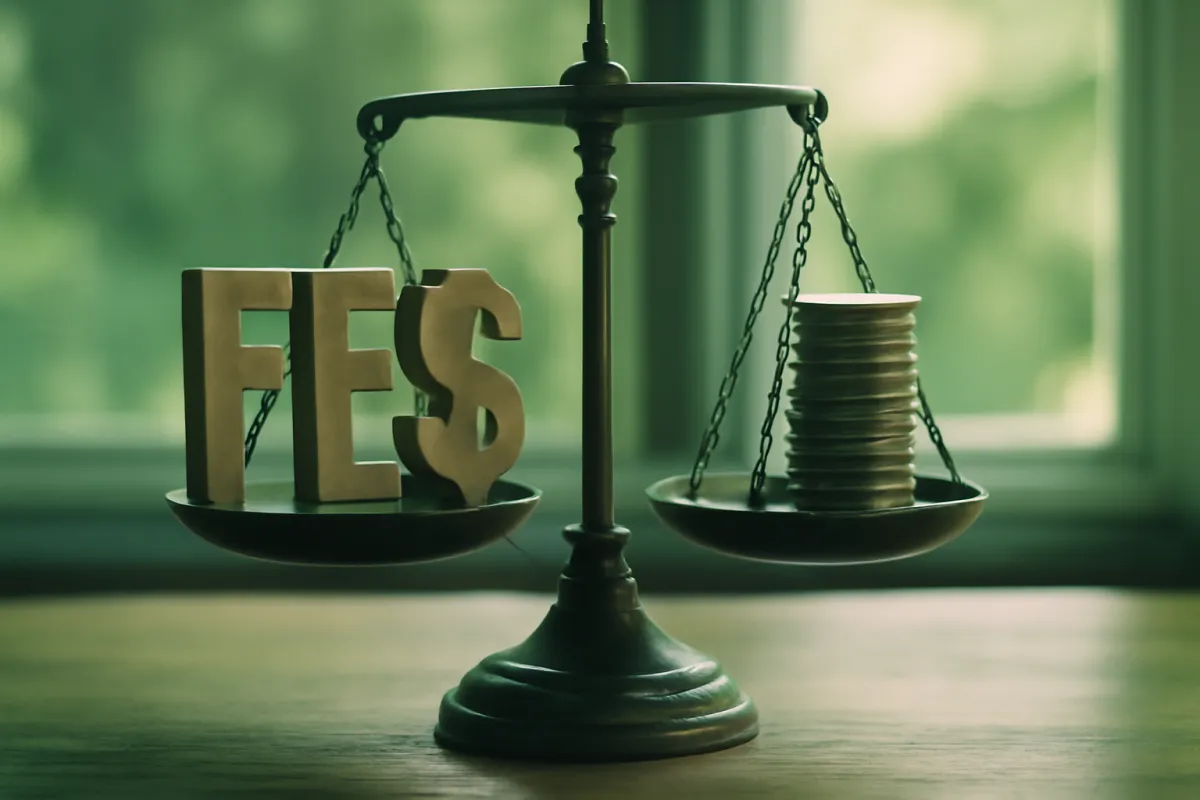
The cost of borrowing with bad credit shows up in four places, and it is worth looking at all of them rather than fixating on the monthly payment. First is the interest rate, which on a bad-credit loan runs far above what strong-credit borrowers pay. Second is the origination fee, a one-time charge often deducted from the money you receive. Third is the term, since a shorter term means a higher monthly payment even at the same rate. Fourth are the smaller charges, such as late fees and, on some loans, prepayment penalties, that add up if the loan goes sideways.
On an illustrative $5,000 loan at a poor-credit rate over three years, the interest alone can rival a third of what you repay, and a 5% origination fee comes out of the proceeds before you ever see the money. That is the real shape of a bad-credit loan: the amount you borrow is only part of the total you pay back. The cost estimator breaks this into principal, interest, and fee so the split is visible on your own numbers.
Illustrative typical APR ceiling by credit band
Rough midpoints for a personal loan, not quotes. Actual rates vary by lender, term, and full profile.
The gap between the top and bottom bar is the price of a low score: the same loan can cost roughly three times the rate at the bottom of the range. Illustrative only.
Here is the same idea as a table, with the terms that usually travel alongside the rate. Every figure is illustrative and meant to show the shape, not to quote a lender.
| Credit band | Typical APR range | Typical loan size | Typical term |
|---|---|---|---|
| Poor (300 to 579) | 28% to 36% | Smaller, often capped low | Shorter (1 to 3 yr) |
| Fair (580 to 669) | 18% to 28% | Moderate | 2 to 4 yr |
| Good (670 to 739) | 11% to 18% | Wider range | 3 to 5 yr |
| Very good (740 to 799) | 8% to 13% | Wide | 3 to 7 yr |
| Excellent (800 to 850) | 7% to 11% | Widest | 3 to 7 yr |
The higher APR, and what it does to your total
The interest rate is the single most important number on a bad-credit loan, and it is worth understanding why a difference that looks small on paper is large in dollars. Interest is charged on the balance you still owe, month after month, so a rate in the low thirties means a big slice of each early payment goes to the lender rather than to reducing what you borrowed. Over the life of the loan, that slice compounds into hundreds or thousands of dollars depending on the amount and term. A strong-credit borrower on the same loan keeps most of each payment working against the principal.
This is why the annual percentage rate, or APR, matters more than the monthly payment when you compare offers. The APR folds the interest rate and certain fees into one yearly figure, so it is the fairest way to line up two loans side by side. A loan with a lower monthly payment but a longer term or a higher fee can easily cost more overall. When you shop, ask every lender for the APR, not just the payment, and put the numbers into the estimator to see the total interest each one implies. On a bad-credit loan, the whole game is minimizing that rate, because it drives everything else.
Lower loan limits and shorter terms
A weak score does not only raise your rate; it also shrinks how much a lender will hand over and how long it will give you to repay. Both are risk controls. A smaller loan means the lender has less money at stake if the borrower falls behind, so bad-credit approvals often come in well under what the applicant hoped to borrow. If you were counting on $15,000 and are approved for $6,000, that gap is the lender pricing your risk in dollars rather than in rate.
The shorter term cuts the other way in your monthly budget. A lender that wants its money back faster will offer two or three years rather than five or seven, which raises the monthly payment even when the rate is unchanged. That higher payment is exactly what you have to be honest with yourself about, because a payment you cannot sustain turns a rebuilding loan into a missed-payment problem that sets your score back further. Before accepting, run the payment through the estimator and confirm it fits alongside your other obligations. Borrowing the smallest amount that actually meets your need is usually the wiser move, since it keeps both the payment and the total interest down.
Origination fees and the charges to watch
Many bad-credit personal loans carry an origination fee, a one-time charge for making the loan, commonly expressed as a percentage of the amount borrowed. The important wrinkle is that this fee is often deducted from the proceeds, so you receive less than the loan’s face value while still repaying the full amount. On an illustrative $5,000 loan with a 5% origination fee, $250 comes out before disbursement, leaving you about $4,750 in hand but $5,000 plus interest to repay. If you need a specific sum in your account, you have to borrow enough to cover the fee, which raises the interest you pay too.
Beyond origination, a few other charges deserve a look in the fine print. Late fees add up quickly on a loan you are already stretching to afford. Some loans carry a prepayment penalty, which charges you for paying the loan off early, an unwelcome surprise if your finances improve and you want to clear the debt. Returned-payment fees apply if an automatic draft bounces. None of these are automatically disqualifying, but they change the true cost, which is why the APR and the full fee schedule, in writing, matter more than any headline rate. Add every fee you can identify to the interest before you decide whether an offer is fair.
Where the money goes on an illustrative $5,000 bad-credit loan
3-year term, an illustrative 32% APR and a 5% origination fee. Not a quote.
At a poor-credit rate, more than a third of what you repay is interest and fee rather than the money you actually borrowed. Lowering the rate is the biggest lever on that share.
How lenders decide beyond your score
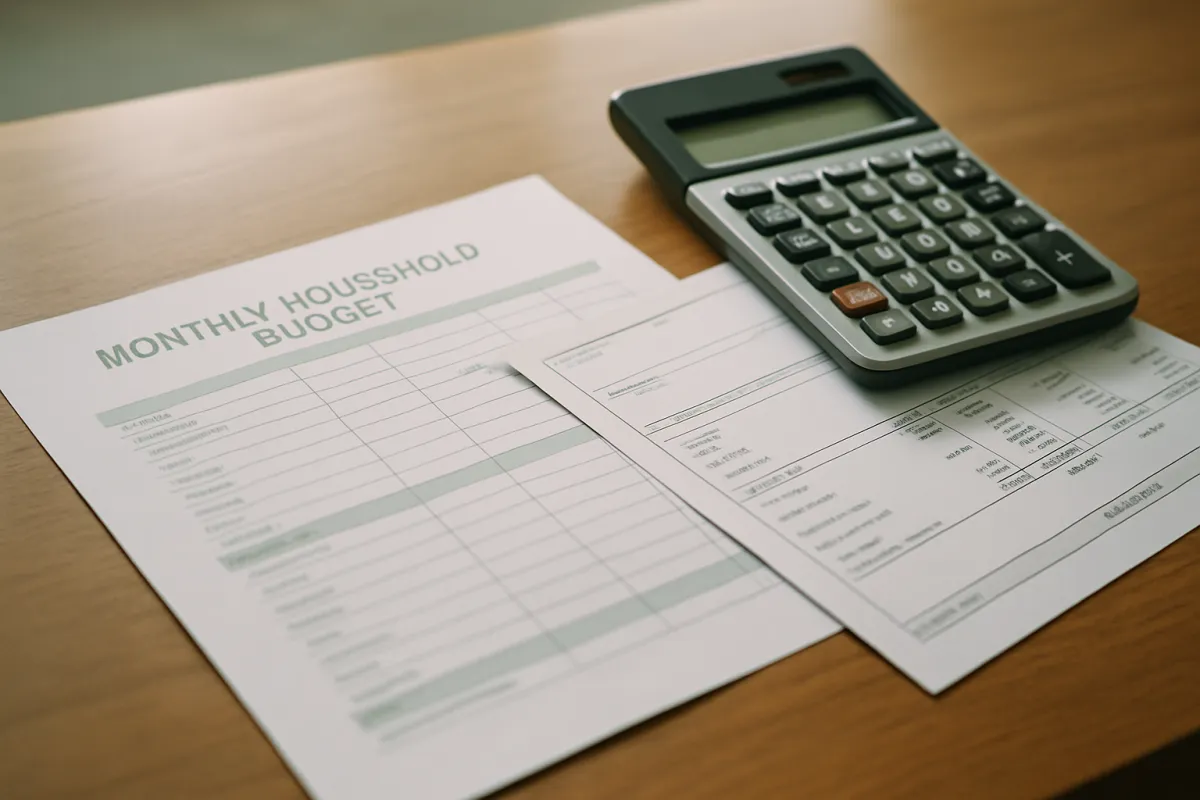
A credit score is a summary, and lenders look past it to the details that tell them whether you can actually afford the loan. Chief among these is your debt-to-income ratio, or DTI, which compares your monthly debt payments to your monthly income. A borrower with a mediocre score but low DTI and steady income can look safer than a borrower with a slightly higher score who is already stretched thin. Lenders want to see that the new payment fits, so lowering your DTI before you apply, by paying down a balance or clearing a small debt, can tip a decision.
Income stability and employment history matter for the same reason. A long tenure at one job, or a steady self-employment record with documentation, signals that the payments will keep coming. Some lenders also weigh whether you have a banking relationship with them, whether you own assets that could secure the loan, and how recent any negative marks on your file are, since an old late payment counts less than a fresh one. None of this replaces the score, but it explains why prequalifying with several lenders is worth doing: each weighs these factors differently, so an applicant declined by one may be approved by another. The estimator can show how the payment on a given loan stacks against your income before you apply.
Prequalify before you formally apply
Prequalification is the most useful step a bad-credit borrower can take, and it costs nothing but a few minutes. Most lenders let you enter basic details and see your likely rate and loan amount using a soft credit check, which does not affect your score. This lets you compare several offers side by side and focus your formal application on the lender most likely to approve you at the best terms, rather than applying blindly and collecting hard inquiries that each ding your file.
The distinction between a soft and a hard inquiry is the reason this matters so much with bad credit. A soft pull, used for prequalification, is invisible to your score. A hard pull, triggered by a formal application, can knock a few points off and shows up on your report. Several hard pulls in a short window read as risk, which is the last thing a thin file needs. So the disciplined sequence is: prequalify widely, compare the real numbers, then apply formally to just one or two lenders. Score-model scoring usually treats multiple loan inquiries within a short shopping window as a single event, but the safest habit is still to keep formal applications few and deliberate. Confirm each prequalified offer’s rate and fees in writing before you commit.
Adding a co-signer or co-borrower
If your own credit is not strong enough to qualify, or qualifies only at a punishing rate, bringing in another person can change the math. A co-signer agrees to repay the loan if you do not, which lets the lender lean on their stronger credit and often turns a decline into an approval or lowers the rate meaningfully. A co-borrower goes a step further and shares the loan and its purpose with you, with both incomes and credit profiles considered. Either can make a bad-credit application viable.
The responsibility this creates is real and worth stating plainly. A co-signer’s credit is on the line for a loan they do not benefit from: if you miss payments, their score suffers and they can be pursued for the balance. The loan typically appears on their credit report too, affecting their own borrowing capacity. Because of that, a co-signer arrangement works best between people with genuine trust and a clear, written understanding of the plan to repay. Treat it as a serious favor, keep every payment on time to protect the person who vouched for you, and aim to refinance into your own name once your credit has recovered enough to qualify alone.
A secured personal loan as a path in
A secured personal loan is backed by collateral, something of value the lender can claim if you default, and that backing is exactly what makes it easier to get with bad credit. Common collateral includes money in a savings account or certificate of deposit, and sometimes a vehicle. Because the lender’s risk is lower, secured loans often come with easier approval, a lower rate, or a larger amount than an unsecured loan for the same borrower. For someone whose score alone would not clear the bar, collateral can be the difference.
The obvious cost is the risk to the asset. If you cannot repay, the lender takes the collateral, so a savings-secured loan puts those savings at stake and a title loan puts your car at stake. That trade can be reasonable when the collateral is savings you are comfortable pledging and the loan carries a much lower rate than an unsecured alternative, since you keep earning while the savings are held and rebuild credit as you repay. It is far riskier when the collateral is something you cannot afford to lose, such as the vehicle you need for work. As a rule, a savings-secured loan from a bank or credit union is a reasonable rebuilding tool, while a high-rate title loan is one to avoid. Price the payment either way in the estimator first.
Show more income and lower your DTI
Because lenders weigh affordability so heavily, strengthening the income side of your application can matter as much as the score itself. Documenting all of your income is the first move: beyond a primary salary, lenders may count a spouse’s income on a joint application, steady side-gig or freelance earnings with records to back them, and certain benefits or support payments. A fuller, well-documented income picture lowers the perceived risk that the payment will not be met.
The other half of the ratio is your existing debt, and paying some of it down before applying can noticeably improve your odds. Every monthly obligation you clear, a small card balance, a nearly finished loan, frees up room in your DTI and signals that the new payment fits. Even shifting a revolving balance down before your statement cuts can help, since it lowers both your utilization and the payment lenders count. Our rundown on getting out of debt covers the payoff methods that make the fastest dent. The combined effect of more documented income and less existing debt can move you from a decline to an approval, or from a punishing rate to a merely high one, without waiting for the score itself to climb.
Where people look: banks, credit unions, online lenders
Bad-credit borrowers generally shop three broad categories of lender, and each has a different posture. Traditional banks tend to have the strictest credit requirements and the most conservative approvals, so they are often the hardest place to qualify with a low score, though an existing relationship and steady deposits can occasionally help. Their advantage is familiarity and, for existing customers, sometimes a secured-loan option against savings.
Credit unions are member-owned nonprofits and are frequently the friendliest starting point for imperfect credit, a point the next section returns to. Online lenders, meanwhile, make up a large and varied category built partly around fair and poor credit borrowers. Many specialize in fast prequalification with a soft pull, letting you see likely terms in minutes, and some weigh factors beyond the score. The tradeoff is that this category ranges from reputable, transparent lenders to high-cost operators, so the vetting matters more here than anywhere. This article names no specific brands on purpose: the right lender depends on your state, your profile, and the offers you actually prequalify for. Compare across all three categories, read the terms, and let the real numbers, not the advertising, decide.
Why a credit union is often the first stop
Credit unions deserve a closer look because their structure tends to favor exactly the borrower this article is written for. As member-owned nonprofits, they return value to members rather than maximizing profit, which often shows up as lower rates and more willingness to work with a thin or bruised file. Many will look at your broader relationship and circumstances rather than reducing the decision to a score, and some offer small-dollar loans designed as a direct, affordable alternative to payday lending.
There is also a legal ceiling that works in your favor. Federal credit unions are capped in the interest rate they can charge, which keeps their worst-case pricing well below the triple-digit rates that predatory lenders reach. Some credit unions offer specific payday alternative loans, small, short-term loans with capped rates and fees, meant to cover an emergency without the payday trap. Joining a credit union usually requires meeting a membership criterion, such as living in an area, working in a field, or belonging to an organization, but the eligibility is often broad and the one-time step can pay for itself in a single loan. If you are shopping a bad-credit personal loan, prequalifying with a credit union alongside online lenders is a sensible first stop.
Red flags: how to spot a predatory lender
The same borrowers who struggle to qualify are the ones predatory lenders target, so knowing the warning signs is a form of self-defense. The clearest red flag is a lender that does not check whether you can repay. A legitimate lender wants its money back and therefore looks at income and debt; a predatory one profits from fees and rollovers even when you cannot repay, so it skips the affordability check and advertises guaranteed approval regardless of credit. If approval is promised before anyone looks at your situation, be wary.
Other signs cluster around pressure and opacity. Watch for a lender that rushes you to sign, that is vague about the total cost or refuses to state the APR in writing, that charges an upfront fee before the loan is funded (a legitimate origination fee comes out of the proceeds, not your pocket in advance), or that pushes add-ons like costly insurance you did not ask for. Confirm the lender is licensed in your state, since unlicensed operators are a serious warning. Read the entire agreement, including the fine print, and insist on the numbers on paper. Anything that will not put the total cost and APR in writing is telling you something. When in doubt, walk away; a fair lender will still be there tomorrow.

The payday and title loan warning
Payday loans deserve a warning of their own, because their structure is built to trap. A payday loan is a small, short-term loan due on your next payday, and while the flat fee sounds modest, converting it to an annual percentage rate lands in the high hundreds of percent. The short window is the problem: many borrowers cannot repay the full amount plus fee in two weeks, so they roll the loan over, paying a new fee to extend it, and the cycle repeats. What began as a small shortfall becomes a recurring drain that is genuinely hard to escape. The product does not fail borrowers by accident; the repeat-fee cycle is where it makes its money.
Car-title loans work on a similar model with an added danger: your vehicle is the collateral, so falling behind can cost you the car you may need to get to work. No-credit-check installment loans with triple-digit rates belong in the same category of last resorts to avoid. Before turning to any of these, exhaust the cheaper options: a small-dollar or payday-alternative loan from a credit union, a hardship or installment arrangement with the biller you owe, help from a nonprofit credit counselor, or even a card cash advance, which is expensive but usually far cheaper than a payday loan. The point is not that emergencies are not real; it is that the payday structure almost always makes a hard situation worse.
Alternatives to a bad-credit personal loan
If a personal loan is out of reach, too expensive, or simply not the best tool, several alternatives both meet a need and build your credit at the same time. A credit-builder loan is purpose-made for this: the lender holds the loan amount in a locked savings account while you make fixed monthly payments, reporting each one to the bureaus, and releases the money to you once the loan is paid off. You finish with both a savings balance and a record of on-time installment payments, which is exactly what a thin file needs. The cost is modest interest, and the risk is low because you are, in effect, saving with a credit benefit attached.
A secured credit card does the same job on the revolving side. You put down a refundable deposit that becomes your credit limit, use the card lightly, and pay it in full each month, building a payment history that can graduate you to an unsecured card over time. Our rundown on building credit walks these starter tools in detail. For an existing debt rather than a new need, an installment or hardship plan directly with the biller often beats new borrowing, and for high-rate card balances, a disciplined payoff plan can be cheaper than a bad-credit consolidation loan. Weigh these before assuming a personal loan is the answer.

Using the loan to rebuild your credit
A bad-credit personal loan is not only a way to borrow; used carefully, it is a way to strengthen the very score that made it expensive. A personal loan adds an installment account to your credit mix, and every payment you make on time feeds the payment-history factor that carries the most weight in your score. Over months, a clean record on the loan gradually lifts your file, which is why a bad-credit loan can be a stepping stone to better terms later, including refinancing the same debt at a lower rate once your score has recovered.
The rebuilding only works under two conditions, both non-negotiable. The payment has to be affordable, because a single missed payment does more damage than months of on-time payments repair, and it lands on the factor that matters most. And you have to avoid piling on more debt while you repay, since new balances raise your utilization and your DTI and undercut the progress. Set the loan on autopay so no due date is ever missed, keep your card balances low alongside it, and let time do the rest. Our playbook on raising your credit score covers the other levers that compound with a well-managed loan. Managed this way, the interest you pay buys not just the money but a better credit future.

A worked example: two borrowers, one loan
Put the pieces together with an illustrative comparison. Two people each want to borrow $5,000 over three years. Priya has a poor-tier score around 560 and is quoted an illustrative 32% APR with a 5% origination fee. Devin has a good-tier score around 700 and is quoted an illustrative 15% APR with no origination fee. The loan is identical in size and term; only the credit changes.
The dollars tell the story. At 32%, Priya’s payment lands near $218 a month, she repays roughly $2,840 in interest over the three years, and $250 of her proceeds vanish to the origination fee, so she receives about $4,750 but repays close to $7,840. Devin, at 15% with no fee, pays about $173 a month and roughly $1,240 in interest, receiving the full $5,000 and repaying about $6,240. Same loan, a difference of well over a thousand dollars, driven entirely by the credit band. That gap is the concrete cost of borrowing with bad credit, and it is also the case for the levers in this article: prequalifying, adding a co-signer, or securing the loan can each pull Priya’s rate down toward Devin’s, and every point saved is real money. Run your own version in the estimator.
Common mistakes when borrowing with bad credit
A handful of avoidable mistakes turn a manageable bad-credit loan into a setback, and they are worth naming so you can sidestep them.
- Applying everywhere at once. A flurry of hard inquiries dings a thin file and reads as risk. Prequalify with soft pulls first, then formally apply to only one or two lenders.
- Chasing the lowest monthly payment. A small payment can hide a long term or a high fee that costs more overall. Compare on APR and total cost, not the payment alone.
- Borrowing more than you need. A bigger loan means more interest and a larger fee. Borrow the smallest amount that meets the actual need.
- Ignoring the fees. The origination fee, late fees, and any prepayment penalty change the true cost. Read the full fee schedule before signing.
- Taking a payday or title loan to bridge a gap. These are the most expensive options and the easiest to get trapped in. Exhaust credit-union and biller alternatives first.
- Skipping the affordability check. A payment you cannot sustain leads to a missed payment, which harms your score more than the loan helps it. Confirm the payment fits your budget first.
Each of these traces back to the same discipline: with bad credit, the terms matter more than the approval, so slow down, read the numbers, and borrow deliberately.
How this fits your wider debt plan
A personal loan is one tool inside a larger financial picture, and it works best when it fits a plan rather than patching a hole. If the loan is meant to consolidate high-rate card debt, the honest test is whether its APR, after the origination fee, actually beats what you are paying now; with bad credit, it sometimes does not, and a structured payoff of the cards can be cheaper. Our rundown on getting out of debt lays out the payoff methods to weigh against new borrowing. And if your score qualifies you for a promo-rate card whose limit covers only some of the debt, moving part of the balance to a promo card can still beat an expensive loan on the slice it covers. If the loan funds a genuine need, the plan is to repay it on time while keeping other balances low, so it rebuilds rather than strains your credit.
The through-line is that a bad-credit loan should move you forward, not sideways. Borrow the smallest amount that meets the need, at the lowest rate you can secure using the levers here, on a payment you have confirmed fits your budget. Keep the loan on autopay, avoid new debt while you repay, and revisit refinancing once your score has climbed enough to qualify for better terms. Priced and managed this way, the loan becomes a deliberate step in a plan to both meet a need and improve your credit, which is a far better outcome than an expensive loan taken in a hurry. The estimator can price the loan against your budget before you commit.
The bottom line
Can you get a personal loan with bad credit? Yes, and the real work is getting the least expensive version of that yes. Bad credit rarely means a flat no; it means a higher rate, a smaller loan, a shorter term, and often an origination fee, so approval and cost are two separate questions and the cost side is where a weak score bites. Knowing your band, from fair through poor, tells you roughly what to expect, and the APR, not the monthly payment, is the number that decides which offer is actually cheapest.
The levers that improve your odds are concrete and worth using: prequalify widely with soft pulls, consider a co-signer or a savings-secured loan, document your income, and pay down other debt to lower your DTI, with a credit union often the friendliest first stop. Steer clear of the predatory end of the market, where payday and title loans hide triple-digit costs behind guaranteed approval, and weigh alternatives like credit-builder loans and secured cards that meet a need while rebuilding your file. Run your own numbers in the estimator, borrow the smallest amount that fits a payment you can sustain, and a bad-credit loan becomes a step forward rather than a trap.
BorrowLane publishes lender-neutral education, and this rundown is general information rather than personal financial advice: we do not recommend specific lenders and have no stake in whether you borrow. Every credit-score band, interest rate, fee, and dollar figure above is illustrative and simplified, and real loan offers vary widely by lender, by state, and by your own income, debt, and credit profile, including rate caps and fee structures not shown here. Predatory lending is a genuine risk for bad-credit borrowers, so confirm any lender is licensed, insist on the APR and total cost in writing, and never borrow more than a payment you can sustain. Confirm the current terms of any offer with the lender before you act, and weigh a loan against your full financial picture, ideally with a qualified, nonprofit credit counselor or a fee-only professional who can see your actual numbers.
Frequently asked questions
Can you get a loan with no credit score?
Yes, though the route is different from borrowing with a low score, because having no credit score means the models cannot rate you rather than that they rate you poorly. Applications that run entirely on a scoring cutoff tend to stop at that missing number, so the paths that work are the ones where something else can stand in for it: a lender willing to underwrite manually using rent, utility, employment, and bank records, a loan secured by your own savings, or an application strengthened by a creditworthy cosigner or co-borrower. Credit unions and small community banks are the most common places manual review still happens, and the tradeoff is a slower, more document-heavy process. Terms vary widely by lender and by state, so confirm the rate, fees, and repayment schedule in writing before accepting anything.
What kinds of loans with no credit score are usually available?
Broadly four routes exist, and none of them is a special product sold as a no credit score loan. Manually underwritten loans let an underwriter weigh alternative data such as on-time rent, steady employment, and consistent bank deposits instead of a score. Savings-secured or share-secured loans let the lender hold your own funds as collateral, which lowers their risk enough that the missing score matters less. A cosigner or co-borrower lets the lender lean on an established file, an arrangement that puts that person's credit genuinely at stake. A credit-builder loan is the fourth route and is designed to create a score rather than fund a purchase, since the money stays locked while your payments report. Advertising promising approval with no credit check at all is a separate and far more expensive category, and it is worth avoiding where the timeline allows.
Can you get a personal loan with bad credit?
Yes, you can get a personal loan with bad credit, though your options narrow and the terms get more expensive as your score falls. Many banks, credit unions, and online lenders run programs aimed at fair and poor credit borrowers, and some weigh income, employment, and existing debt more heavily than the score alone. What changes with bad credit is not usually whether a loan exists, but the price of it: a higher interest rate, a smaller borrowing limit, a shorter repayment term, and often an origination fee. Confirm the exact rate and fees with the lender in writing before you accept, since every figure varies by borrower.
What credit score do you need for a personal loan?
There is no single cutoff, because each lender sets its own minimum and many do not publish it. Broadly, scores in the good range (670 and up) unlock the widest choice and the lowest advertised rates, the fair range (580 to 669) still qualifies at many lenders but at higher rates, and the poor range (below 580) is where approvals get scarce and pricing climbs steeply. Some lenders will consider a score in the 500s if your income and debt load are strong, while others start at 640 or higher. Because the bands are illustrative and lender policies differ, the only reliable way to know is to prequalify, which shows likely terms without a hard inquiry.
What interest rate can I expect on a bad-credit personal loan?
Rates on bad-credit personal loans run well above what strong-credit borrowers pay, often reaching the high twenties or into the thirties as a percentage, versus single digits or low teens for excellent credit. These figures are illustrative and move with the wider rate environment, the lender, the loan term, and your full profile, not the score alone. Many states also cap the maximum rate a licensed lender can charge, which is one reason credit unions, capped by law at a lower ceiling, are often a cheaper starting point. Treat any advertised range as a starting point and confirm your actual rate through prequalification, since the lowest number in a lender's range is usually reserved for its strongest applicants.
How can I improve my odds of qualifying with bad credit?
Several levers move the odds without waiting years for your score to climb. Prequalifying with several lenders shows who is likely to approve you before any hard inquiry hits your file. Adding a creditworthy co-signer or co-borrower lets the lender lean on their credit, which can turn a decline into an approval or lower the rate. Choosing a secured loan, backed by savings or a deposit, reduces the lender's risk and often improves both approval odds and pricing. Documenting steady income and paying down other balances to lower your debt-to-income ratio also helps, since lenders weigh affordability alongside the score.
What is a predatory lender, and how do I avoid one?
A predatory lender profits from borrowers in a weak position by burying the true cost in fees, penalties, and rollovers rather than competing on a fair rate. Warning signs include a lender that does not check your ability to repay, guarantees approval regardless of credit, pressures you to sign immediately, is vague about the total cost or the annual percentage rate, or charges an upfront fee before any loan is funded. Payday loans, car-title loans, and no-credit-check installment loans with triple-digit rates are the products where this behavior concentrates. Protect yourself by reading the full agreement, insisting on the APR in writing, confirming the lender is licensed in your state, and walking away from anything that will not put the numbers on paper.
Are payday loans a good option for bad credit?
No, payday loans are one of the most expensive ways to borrow and are best treated as a last resort, if used at all. Their fees translate into annual percentage rates that commonly reach the high hundreds of percent, and the short repayment window pushes many borrowers into rolling the loan over, stacking new fees onto the old balance in a cycle that is hard to escape. The same caution applies to car-title loans, which put your vehicle at risk. A small-dollar loan from a credit union, a payment plan with the biller you owe, or even a cash advance on a credit card, though costly, is almost always cheaper than a payday loan. The goal is to avoid a product whose structure is designed to keep you borrowing.
What alternatives exist if I cannot qualify for a personal loan?
If a personal loan is out of reach or too expensive, a few alternatives both meet a need and rebuild credit. A credit-builder loan holds the borrowed amount in a locked account while you make payments, reporting each on-time payment to the bureaus, so you finish with both a savings balance and a stronger file. A secured credit card, backed by a refundable deposit, works similarly for revolving credit. For an existing bill, asking the biller for a hardship or installment plan often beats new borrowing. And for high-rate card debt specifically, focusing on a structured payoff plan can be cheaper than taking a new bad-credit loan to consolidate it.
Will a bad-credit personal loan help me rebuild my credit?
It can, if you make every payment on time and do not take on more debt than you can handle. A personal loan adds an installment account to your file, and a record of on-time payments is the single most influential factor in your score over time, so a loan managed well gradually strengthens your credit. The benefit only holds if the payments are affordable, since a missed payment does more damage than the new account does good. The interest and fees are the price you pay for that rebuilding, which is why it is worth borrowing the smallest amount that meets your need and confirming the payment fits your budget before you sign.

Hamza Hai is the editor of BorrowLane. She holds an MBA and reviews the site's articles against our editorial standards, checking that every figure is labelled for what it is, that nothing is presented as verified fact without a source the reader can check, and that the writing stays useful to a non-specialist.