

What's on this page
- How to build business credit from scratch
- How to start building business credit in months 0 to 3
- The EIN, D-U-N-S, and net-30 sequence in order
- What business credit is and why it stands apart from personal credit
- Why business credit building matters
- The business credit bureaus that track your company
- Step 1: Form an LLC or corporation
- Step 2: Get an EIN from the IRS
- Step 3: Open a business bank account
- Step 4: Get a D-U-N-S number
- Step 5: Open net-30 vendor accounts that report
- Step 6: Get a business credit card
- Step 7: Pay early, not just on time
- The seven steps at a glance
- The fastest way to build business credit
- How business credit scores work
- How long it takes to build business credit
- How much business credit you can get
- When personal and business credit still overlap
- Common mistakes when building business credit
- Troubleshooting a business file that is not showing up
- Monitoring your business credit
- Using business credit to finance growth
- Building business credit with an EIN and a D-U-N-S number
- Building business credit vs building personal credit
- A month-by-month timeline for building business credit
- A worked example: a new LLC’s first 18 months
- The bottom line
Short answer: Build business credit by working a fixed sequence: form an LLC or corporation, get an EIN, open a business bank account, obtain a D-U-N-S number, open net-30 vendor accounts that report, add a business credit card, and pay every bill on time or early. On an illustrative clock a first readable file appears around month four or five, and an established profile takes a year or more.
Business credit building is one of the highest-leverage moves a new company owner can make, and the good news is that it is far more of a checklist than a mystery. Business credit is a track record the business earns in its own name, kept separate from your personal credit, and suppliers, lenders, and even landlords use it to decide how much to trust the company with. A strong business file can unlock higher limits, better terms, and financing that does not lean on your personal score, while a thin or nonexistent file leaves the business borrowing on your back or not borrowing at all. The system rewards a specific, boring sequence of steps done in order and then maintained with clean, early payments.
This playbook lays out how to build business credit from scratch and treats the work as an ordered sequence rather than a pile of tips: how long a file takes to exist at all, the seven concrete steps in order (form an entity, get an EIN, open a business bank account, obtain a D-U-N-S number, open net-30 vendor accounts that report, add a business credit card, and pay early), which bureaus track your company, how business scores work, and where each stage usually lands on a calendar. You can run your own starting point through the companion beside this article to see what to do next, and if you are still building your own personal file, our companion playbook on how to build credit covers that side. The short version, if you want it now: make the business a real separate entity, give it accounts that report, and pay every one of them early.
Key takeaways
- Business credit is a file the company earns in its own name, tracked by separate bureaus and scored by its own models, distinct from your personal credit.
- Nothing exists on day one. The paperwork months produce no history at all, and on an illustrative clock a first readable file lands around month four or five and an established profile takes a year or more.
- The foundation is legal separation: an LLC or corporation, an EIN, and a dedicated business bank account, before any credit-building begins.
- Reporting accounts are what actually build the file: net-30 vendor accounts that report, plus a business credit card, all paid on time or early.
- The three business bureaus most often referenced are Dun and Bradstreet, Experian Business, and Equifax Business, and each keeps its own record.
How to build business credit from scratch
Starting from nothing, expect roughly four to five months before a business credit file exists in any readable form, and a year or more before it is established enough for a lender to lean on. That is the honest headline, and it is the number most owners are actually asking for when they search for business credit building. The reason is arithmetic rather than bureaucracy: a business score is built from reported payment data, and a brand-new company has none. Until a vendor or issuer sends a paid invoice to a bureau, there is nothing to score, no matter how much paperwork you have completed.
That leads to the single most useful thing to understand before you start. The first phase of building business credit produces no credit history whatsoever. Forming an LLC, getting an EIN, opening a business bank account, and requesting a D-U-N-S number are identity steps: they make the business a borrower that can hold accounts and give the bureaus somewhere to file what arrives. None of them reports anything. Owners routinely spend six weeks on this phase, check a report, find it blank, and conclude they did something wrong. Nothing is wrong. The clock has simply not started, because the clock starts at the first reported payment.
The from-scratch sequence is therefore short to describe and slow to complete. Register the entity, get the EIN, open the business bank account, and request the D-U-N-S number in the first few weeks, treating all four as one task rather than four milestones. Then open several net-30 vendor accounts you have confirmed report to at least one business bureau, buy things the business genuinely needs, and pay each invoice well ahead of its due date. Add a business credit card that reports once the vendor accounts are live. Then repeat, for months, without drama. If you want the personal-credit analogue of this waiting problem, our breakdown of how long it takes to build credit covers the consumer version of the same arithmetic.
One more framing point is worth setting down at the start. Building business credit is not a score you chase but a record you accumulate, and the two levers you control are how many reporting accounts are feeding the bureaus and how far ahead of terms you pay them. Everything below is an expansion of those two levers plus the paperwork that makes them possible. The companion beside this article turns your current setup into an illustrative months-to-established figure so you can see which of the two levers is holding you back.
How to start building business credit in months 0 to 3
If the business is genuinely new, with no tradelines and nothing on file anywhere, the first ninety days have a fixed shape. Nothing in them produces a score. What they produce is a borrower that can hold accounts and a set of accounts that will eventually report. Before you start, gather what every form in this stretch will ask for: the legal business name exactly as you intend to register it, the business address and phone number, the industry the company operates in, and the owner’s own identification. Having those in one place is the difference between a week and a month, because each step feeds the next and a mismatch anywhere sends you back to the beginning of the form.
Month 0 is the entity and the EIN, ideally in the same sitting. The entity filing is a state process and the EIN is a federal one, and the EIN application asks for the registered business, so the order is fixed rather than a preference. Then open the business bank account with the formation document and the EIN in hand. Route the first dollar of business revenue through that account rather than through personal checking, because the separation is far easier to establish now than to reconstruct from a year of mixed transactions later. At the end of month 0 the business exists, holds an account, and has no credit file of any kind.
Month 1 is the D-U-N-S number and the vendor research, in parallel rather than in series. Request the D-U-N-S number from Dun and Bradstreet so that bureau has a record for future reported payments to attach to. The research is the real work of this month. For each supplier you are considering, ask directly whether it reports trade payments to the business bureaus and which ones, and treat a vague answer as a no. Reporting is voluntary on the business side, so this one question decides whether the next three months count for anything.
Month 2 is opening the accounts, several in the same month rather than one at a time, and only with suppliers the business would buy from anyway. Manufactured purchases from a vendor you do not need are an expense with no return, and a credit file cannot tell the difference between a useful order and a performative one. Place real orders for things the company actually consumes. Those first invoices arrive on net-30 terms, which means the payment you make against them is the first event in this entire process that a bureau might ever see.
Month 3 is paying those first invoices well ahead of their due dates and placing the next round of orders. It is also the month to look honestly at the owner’s own personal file, because a young company is underwritten largely on its owner and a business card application in month four or five will lean on it. If that personal file is thin or damaged, the parallel work sits on the consumer side: a secured credit card and a credit-builder loan are the two products built for a file with nothing in it, and both report on the personal side while the business side is still forming.
Now the part most starting sequences leave out. Three things in the first ninety days cannot be shortened by effort, money, or clever sequencing. The first is the vendor’s own reporting cycle: a supplier submits trade data on its schedule, and paying an invoice in three days rather than twenty-five does not make that submission arrive any sooner. The second is the bureau’s ingestion, because data has to arrive, match to your business record, and accumulate before it reads as a history at all. The third is elapsed time itself, since the length of a trade record is a factor that no volume of activity substitutes for. Everything else in the ninety days is yours to compress, which is exactly why compressing it is worth the effort.
Two things that look like shortcuts deserve naming so you can decline them without wondering. An aged shelf corporation, sold as a company that already has years of history attached, misrepresents the operating business to anyone underwriting it and does not carry the trade payment record a business score is actually assembled from. Services promising guaranteed high-limit approvals against an EIN with no personal guarantee are selling around a floor that does not move for anyone. Neither is a faster path, and both trade a real risk for months you could have banked by starting the ordinary sequence sooner.
It is fair to ask why the consumer side is usually quoted at around six months when a business file can start reading at four to five. The difference is in the rules rather than the speed. The main consumer scoring models are commonly described as requiring a minimum stretch of reported history, often cited as roughly six months, before they will generate a number at all, which our breakdown of how long it takes to build credit works through in detail. Business scoring has no single equivalent minimum published across every model, so a business file can begin reading as soon as reported trade data exists for it. That is a different starting rule rather than an advantage, and it is why your vendor accounts, not your paperwork, decide when the clock starts.
The EIN, D-U-N-S, and net-30 sequence in order
Most business credit advice lists the same ingredients without saying which one comes first, what each one actually unlocks, or which of them report anything at all. The table below fixes that. It puts the sequence in order, names what each step makes possible, gives an illustrative window for when it usually happens, and states plainly whether that step sends any data to a bureau. The windows are directional, chosen to show the shape of a normal build rather than to promise dates.
| Order | What you set up | What it unlocks next | Illustrative window | Does it report anything? |
|---|---|---|---|---|
| 1 | LLC or corporation | The right to hold an EIN, a bank account, and credit lines in the company’s own name | Month 0 to 1 | No, it is legal identity only |
| 2 | EIN from the IRS | Bank account, vendor account, and card applications in the business name | Month 0 to 1, straight after the entity | No, it is a tax identifier |
| 3 | Business bank account | A clean cash-flow record, plus most vendor and card applications | Month 0 to 1 | No to the bureaus, though banks weigh the relationship |
| 4 | D-U-N-S number | A Dun and Bradstreet file for reported payments to land in | Month 1 to 2 | No, it is the address, not the history |
| 5 | Net-30 vendor accounts that report | Your first tradelines, the raw material every business score is made of | Opened month 2 to 4, first data lands about month 4 to 5 | Yes, if that specific vendor reports |
| 6 | Business credit card that reports | Revolving history and a balance-to-limit picture | Month 4 to 6 | Yes, if that specific issuer reports |
| 7 | Early payment on every account | Rising limits and, over time, terms without a personal guarantee | Month 5 onward, permanently | Yes, every billing cycle |
Read the right-hand column first, because it carries the lesson. Four of the seven rows report nothing. They are prerequisites, not progress, and treating them as progress is the most common reason owners feel stalled. Rows five, six, and seven are the only ones that put data in front of a bureau, and rows five and six only do so conditionally, when the vendor or issuer happens to report. That conditional is the difference between business and personal credit that catches people out, and it deserves a question asked before every account is opened: do you report, and to which bureaus?
The order matters as much as the contents. The EIN has to come before the bank account, because the bank will ask for it. The bank account has to come before most vendor and card applications, because they will ask for it. The D-U-N-S number should be in hand before your first vendors start reporting, so there is a file for their data to attach to rather than a gap to reconcile later. And the vendor accounts should come before the card, because trade lines are usually easier to open on a blank file than a revolving line is. Follow the rows top to bottom and no step waits on one you have not done.

What business credit is and why it stands apart from personal credit
Business credit is the company’s own borrowing reputation, recorded and scored under the business’s identity rather than yours. Where your personal credit follows your Social Security number across every consumer card and loan you ever hold, business credit is keyed to the business itself, often through an EIN and a D-U-N-S number, and it is assembled from the accounts the company opens in its own name. The two are genuinely separate records maintained by different bureaus, which is exactly what makes building a business file worthwhile: done right, the company can borrow on its own strength without every transaction landing on your personal report.
The separation is not automatic, though, and that is the part many owners miss. A file only exists once the business has an identity distinct from you and accounts that report under it. A sole proprietor who buys everything on a personal card has no business credit at all, just personal credit used for business purposes. The work of this playbook is to create that separation deliberately: give the business a legal identity, a tax number, a bank account, and reporting credit lines, so a real file can form. Once it does, the business becomes a borrower in its own right, and the stronger that file grows, the less your personal credit has to carry. Building it is a sequence anyone can follow, and the sections below take it one step at a time.
Why business credit building matters
It is fair to ask why any of this is worth the effort when you already have personal credit. The answer is that a business file does three things a personal card cannot. First, it lets the company access higher limits and larger financing that are sized to business needs rather than to a personal budget, because lenders judge the business on its own revenue and payment record. Second, it keeps business borrowing off your personal report, which protects your personal utilization and leaves your own borrowing capacity free for a mortgage or other personal goals. Our coverage of how credit utilization works explains why keeping personal balances low matters so much, and moving business spending onto a business file is one of the cleanest ways to do it.
Third, a real business file builds an asset that lives with the company rather than with you. As the business establishes its own credit, it can increasingly qualify for terms without a personal guarantee, which is the point at which the separation becomes truly protective. That maturity also makes the business more credible to suppliers negotiating terms, to landlords weighing a lease, and eventually to a buyer if you ever sell. In short, business credit is not a vanity metric; it is the financial infrastructure that lets a company grow on its own footing instead of borrowing against its owner forever. The rest of this playbook is the practical path to building it.

The business credit bureaus that track your company
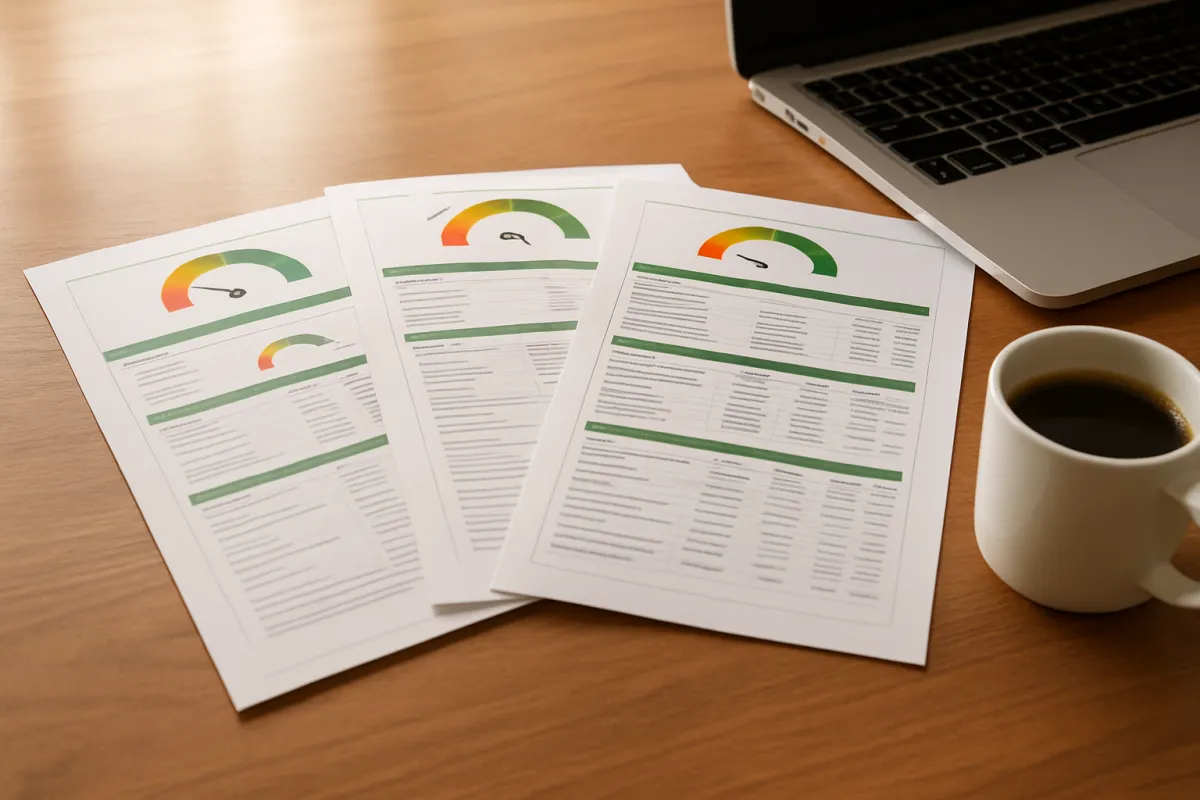
Just as consumer credit has its major bureaus, business credit has its own, and the three most commonly referenced are Dun and Bradstreet, Experian Business, and Equifax Business. Each keeps a separate file on your company, gathers data from vendors and lenders that choose to report, and publishes its own scores and reports. Dun and Bradstreet is widely known for its PAYDEX score, which centers on how promptly a business pays, and it is the bureau tied to the D-U-N-S number. Experian and Equifax each maintain their own business databases and publish their own business scores drawn from payment history, balances, public records, and company information.
The practical consequence of having three separate bureaus is that your file can look different at each one. Reporting is voluntary, so a vendor might report to one bureau and not another, which means a strong payment record at Dun and Bradstreet does not guarantee an identical picture at Experian Business or Equifax Business. That is why two habits matter: choose accounts that report (and, where you can, that report to more than one bureau), and check your profile at more than one bureau so you catch gaps and errors. Building a file is partly about feeding all three consistent, positive data over time. None of these bureaus is a single gatekeeper; together they form the record that lenders and suppliers consult, and your job is to give each of them a clean, growing history to read.
Step 1: Form an LLC or corporation
The first real step is to give the business a legal identity separate from you, which for most owners means forming an LLC or a corporation. This matters because a sole proprietorship is, in the eyes of the law, the same person as its owner, so its finances and credit tend to blend back into your personal file. An LLC or corporation, by contrast, is a distinct legal entity that can hold a tax number, a bank account, and credit lines in its own name. That separation is the foundation the entire business credit file is built on, because without a distinct entity there is nothing for the bureaus to track independently of you.
Choosing between an LLC and a corporation, and the state you register in, carries tax and liability consequences that reach well beyond credit, so this is a decision worth making deliberately rather than by default. An LLC is often simpler and popular with small operators, while a corporation can suit businesses planning to raise investment or issue stock, but the right answer depends on your specific situation. Because the stakes include how you are taxed and how personal liability is handled, it is genuinely worth confirming the structure with a qualified attorney or accountant before you file. For the narrow purpose of building credit, the point is simpler: create a real, registered entity so the business can act, and be judged, as itself. Everything downstream, from the EIN to the bank account to the first vendor tradeline, depends on this separation existing first.
Step 2: Get an EIN from the IRS
With an entity formed, the next step is to get an Employer Identification Number, or EIN, from the IRS. An EIN is a federal tax identification number for your business, and it functions a little like a Social Security number for the company: it identifies the business to the government, to banks, and to vendors. You generally apply for an EIN directly through the IRS (the IRS’s page on getting an employer identification number), and for most businesses the number is issued at no cost, so be wary of any service that treats obtaining one as an expensive product. The EIN is the identifier that lets the business open accounts and file taxes in its own name.
The EIN matters for credit because it is a key part of letting the business build a file that is not tied to your personal Social Security number. When you open a business bank account, apply for a business card, or set up a vendor account, using the EIN keeps that activity on the business’s record rather than folding it into your personal one. It is a small administrative step, but it is a load-bearing one: without an EIN, the business cannot cleanly hold its own accounts, and without its own accounts, it cannot build its own credit. Get the EIN early, right after the entity is formed, so every account you open from that point forward is anchored to the business. You can check where you stand on these foundational steps in the companion beside this article, which flags the next brick to lay.
Step 3: Open a business bank account
The third foundation step is to open a dedicated business bank account in the company’s name, using the entity and the EIN you just set up. This does two things at once. It reinforces the legal and financial separation between you and the business, which is exactly the separation business credit depends on, and it creates a clean record of the company’s cash flow that lenders may look at when they weigh an application. Running business income and expenses through a business account, rather than through your personal checking, is one of the clearest signals that the company operates as its own financial entity.
Beyond the credit angle, a business bank account brings order that pays off later. It makes bookkeeping and tax filing far simpler because business and personal transactions never tangle, and it gives you a bank relationship that can grow into a business card, a line of credit, or a loan as the company matures. Some banks also weigh the age and activity of your business deposit relationship when they consider you for financing, so opening the account early and running steady activity through it can help down the road. Keep the account active and tidy: deposit revenue, pay expenses, and avoid dipping into personal funds to cover business costs or vice versa. That discipline keeps the wall between the two files intact, which is the whole point of the foundation you are building in these first three steps.
Step 4: Get a D-U-N-S number
Once the business has an entity, an EIN, and a bank account, the next identifier to secure is a D-U-N-S number. A D-U-N-S number is a unique nine-digit code that Dun and Bradstreet assigns to a business, and it is how that bureau keys your company’s file. Many vendors and lenders look up a business by its D-U-N-S number when they report activity or check a company’s standing, so having one is part of being visible in the business credit system. You typically request a D-U-N-S number from Dun and Bradstreet, and a business can be assigned one as it establishes its profile.
It is worth keeping the D-U-N-S number in perspective. It is an identifier, not a score, so obtaining one does not by itself create good credit; it simply opens the door for Dun and Bradstreet to track your payment behavior once accounts start reporting. It also is not the only identifier that matters, because Experian Business and Equifax Business maintain their own records keyed their own way. Think of the D-U-N-S number as registering the business with one of the major bureaus so your future payment history has a place to land there. Secure it as part of establishing your identity, then move on to the accounts that will actually populate the file. With the entity, EIN, bank account, and D-U-N-S number in place, the foundation is complete, and the remaining steps are about generating the reporting activity that builds the score.
Step 5: Open net-30 vendor accounts that report
Here is where the file actually starts to grow, and where the clock genuinely starts. Net-30 vendor accounts are trade accounts with suppliers that let the business buy goods or services now and pay the invoice within thirty days, and crucially, some of these vendors report your payment behavior to the business bureaus. They are a common first credit-building move because they can be easier to open than a business loan or card, and each on-time or early payment adds a positive tradeline to your file. A handful of reporting net-30 accounts gives a young business its first real, reported payment history, which is the raw material every business score is made from.
The single most important detail is that only vendors who actually report will help your credit. A net-30 account with a supplier that does not report to any business bureau builds a relationship but not a file, so it is worth confirming that a vendor reports, and ideally to which bureaus, before you rely on it as a credit-builder. Open a few reporting accounts rather than just one, so several tradelines are feeding the bureaus at once, and then use them for real, ordinary purchases the business needs anyway. Pay each invoice on time, or better yet early, because the timing of these payments is what business scores reward most. Treat net-30 vendor accounts as the foundation of your reporting activity, not the whole of it, and pair them with the business card in the next step so both trade and revolving credit show up on your file.

Step 6: Get a business credit card
A business credit card adds the revolving side of the file and, when it reports to the business bureaus, contributes another stream of payment history and a picture of how the company manages a credit line. Where net-30 vendor accounts show that the business pays its suppliers, a business card shows that it can handle revolving credit responsibly, which rounds out the profile. A card also brings practical benefits: it consolidates business spending in one place, simplifies expense tracking, and often carries rewards or tools built for business use. As with vendors, favor a card that reports to the business bureaus so the account actually helps your file.
Two cautions shape how a first business card fits into the plan. First, many business cards, especially for a young company, require a personal guarantee, which means your personal credit backstops the account and a default can reach your personal report. That is not a reason to avoid the card, since a personal guarantee is normal early on, but it is a reason to treat the card with the same discipline you would a personal one. Second, business scoring pays attention to balances relative to available credit, so keeping the reported balance low still matters. Use the card for regular business expenses, pay the statement in full, and keep utilization modest, exactly as you would on the personal side described in our utilization playbook. As the business file strengthens, you may later qualify for cards without a personal guarantee, which is the point at which the card sits entirely on the business’s own credit.
Step 7: Pay early, not just on time
On the personal side, paying on time is the gold standard. On the business side, there is a level above it: paying early. Some business scores, most famously the PAYDEX model from Dun and Bradstreet, are built around how promptly a company pays relative to its terms, and paying before the due date can read more favorably than paying exactly on it. That makes “pay early” a genuine strategy for business credit rather than a nicety. When an invoice says net-30, paying it in fifteen or twenty days signals a company that manages cash well and treats its obligations as a priority, and the scoring reflects that behavior.
Building the early-payment habit is mostly a matter of systems. Track every due date, keep enough cash in the business account to pay ahead, and clear invoices as they come in rather than waiting for the deadline. Because business scores lean so heavily on payment behavior, this one habit does an outsized share of the work of building a strong file, in the same way that on-time payment dominates a personal score. It also compounds: a long record of early payments across several reporting accounts is exactly the profile that earns higher limits and, eventually, terms without a personal guarantee. Automate what you can, set reminders for what you cannot, and make early payment the default. The companion beside this article will show how far along your file is and reinforce this as the habit that matters most once the foundation and accounts are in place.

The seven steps at a glance
With the steps explained, here they are in one place so you can work down the list in order. The sequence matters: the foundation steps create the separate identity that the reporting steps then populate with history. Read the table as a checklist, complete the rows top to bottom, and then keep the last row going indefinitely.
| Step | What to do | Why it matters |
|---|---|---|
| 1. Form an entity | Register an LLC or corporation for the business | Creates a legal identity separate from you, the foundation of any business file |
| 2. Get an EIN | Apply for a free EIN from the IRS | Gives the business its own tax identifier so accounts sit on its record, not yours |
| 3. Business bank account | Open a dedicated account in the company’s name | Reinforces separation and creates a clean cash-flow record lenders may review |
| 4. D-U-N-S number | Request a D-U-N-S number from Dun and Bradstreet | Registers the business with a major bureau so its history has a place to report |
| 5. Net-30 vendors | Open a few reporting vendor accounts and pay early | Generates the first tradelines, the raw payment history a score is built from |
| 6. Business card | Add a business card that reports to the bureaus | Adds revolving credit and shows the company manages a credit line responsibly |
| 7. Pay early | Clear every account ahead of its due date | Business scores reward early payment, so this habit builds the file the fastest |
The fastest way to build business credit
If speed is the goal, the honest answer has two halves: one half you control completely, and one half you cannot compress at all. The part you control is the setup. Finish the separation paperwork in as close to one sitting as you can manage, because none of it generates history and every week spent on it is a week the clock is not running. Form the entity, get the EIN, open the business bank account, and request the D-U-N-S number inside the first few weeks rather than spacing them out across a quarter. Owners who treat these as four separate projects routinely add two months to their own timeline for no benefit at all.
The second lever is parallelism. Opening three or four confirmed reporting net-30 accounts in the same month gives the bureaus several streams of data at once instead of one, and four accounts reporting for four months is worth considerably more to a young file than a single account carried for sixteen. Use those accounts for supplies the business genuinely needs, so the spending is real rather than manufactured, and pay each invoice well ahead of its due date. Speed comes from parallel reporting accounts plus early payment, because those are the two inputs business scoring weighs most heavily and both of them are entirely in your hands.
The half you cannot compress is the reporting cycle itself. A vendor reports on its own schedule, a bureau ingests on its own schedule, and no amount of enthusiasm moves either. That is why the illustrative floor for a readable file sits around four to five months even for an owner doing everything right, and why an established profile still takes a year or more. Anyone selling instant business credit, guaranteed high-limit approvals, or an aged shelf corporation is selling a way around that floor, and there is no legitimate way around it. Those offers trade a real risk, including misrepresenting your company to a lender, for a saving of a few months you could have banked by simply starting sooner.
How business credit scores work
Business scores are their own family of models, and while the exact formulas are proprietary, the shape of what they reward is well understood and points your effort in the right direction. The dominant factor across business scoring is payment behavior: whether, and how promptly, the company pays what it owes. Beyond that, models look at the length and depth of your trade history, the number of accounts reporting, how much of your available business credit you are using, any public records such as liens or judgments, and background information about the company itself. The chart below sketches an illustrative ranking of those factors, drawn to show the order of importance rather than exact model weights.
What shapes a business credit profile (illustrative)
Illustrative, directional weights of the factors business scores tend to reward. Widths are drawn from each value against the largest, payment behavior.
These values are illustrative and directional, not exact weights for any one model such as PAYDEX or a specific Experian or Equifax business score. The lesson is the ranking: payment behavior dominates, so a company that pays early across several reporting accounts is doing most of what business scores measure.
Read that ranking as marching orders. The tallest bar, payment behavior, is the one you control immediately and completely, which is why the pay-early habit carries so much of the load. The next bars, trade history length and the number of reporting accounts, are why opening a few reporting vendors early and then keeping them for the long term pays off: both length and count grow only with time and consistency. The smaller factors still matter, and public records in particular can drag a file down, so keeping the business clear of liens and judgments protects the score. But the headline is simple: pay early, across enough reporting accounts, for long enough, and the largest components of any business score take care of themselves.
How long it takes to build business credit
The honest answer to how long this takes is that it is measured in months and years, not days, and it depends heavily on your own pace. A basic business file can begin forming around month four or five, once the first tradelines you opened in months two to four have run a reporting cycle, because a score needs something to score. Reaching a genuinely established profile, the kind lenders lean on for larger financing or terms without a personal guarantee, commonly takes a year or more of consistent, reported, early-paid activity. There is no fixed number, and any specific figure should be read as directional rather than promised.
Where your first year of business credit comes from
Illustrative split of what drives a new file's first year of progress, summing to 100.
Shares are illustrative, chosen to show where a new file's early progress comes from rather than exact contributions. The lesson is that reporting tradelines and the early-payment habit, not the paperwork alone, are what actually grow the score.
Several things move the timeline. Opening several reporting accounts early, rather than adding one at a time, gives the bureaus more data sooner and tends to establish a usable file faster. Paying every account early accelerates the payment-behavior factor that business scores weight most. Conversely, a business that opens accounts with non-reporting vendors, pays late, or picks up a public record will build slowly or backward. The companion beside this article gives you an illustrative months-to-established figure based on where your foundation and accounts stand, so you can see how each choice bends the curve. As with personal credit, the mindset is patience with a plan: the score is arithmetic reading months of behavior, and the behavior comes first.

How much business credit you can get
A natural question once the file is building is how much credit the business can eventually access, and the honest answer is that it varies widely with the company’s revenue, time in business, industry, and file strength. Early on, a new entity with a thin file will typically see modest vendor lines and starter card limits, often backed by a personal guarantee. As the file matures, with a longer history, more reporting accounts, and a clean early-payment record, lenders grow more comfortable extending larger lines and loans sized to the business’s cash flow rather than to the owner’s personal budget. The trajectory is the point: limits tend to rise as the file demonstrates reliability over time.
What lifts the ceiling is the same behavior that built the file in the first place. A consistent record of paying early across several reporting accounts, low balances relative to available business credit, steady revenue running through the business bank account, and a clean public record all signal a company that can handle more. Some lenders also weigh time in business and industry risk, which are partly outside your control, but the credit behavior is squarely in your hands. Rather than chasing a specific number, focus on the inputs: build reporting history, pay ahead, keep balances modest, and let the limits follow. When you do borrow, model what the financing actually costs before you commit, using our debt payoff calculator to see the interest and total cost of a given balance and rate, so the amount you qualify for is one you have already tested against the business’s budget.
When personal and business credit still overlap
For all the emphasis on separation, personal and business credit are not sealed off from each other, and the main bridge between them is the personal guarantee. When a young business applies for a card or loan, the lender often asks the owner to personally guarantee the debt, meaning that if the business cannot pay, the owner is personally responsible and the default can reach the owner’s personal credit. This is normal and not something to fear, but it is important to understand, because it means that early on, mismanaging a business account can still damage your personal file. The separation you are building is real but incremental; it widens as the business file strengthens and you qualify for more accounts on the company’s own credit.
There are other overlaps worth knowing. Some business card issuers may consider your personal credit when they decide whether to approve the business, especially before the business has much of a file, so a healthy personal score can help you open the very accounts that build the business one. And some lenders may report a business account to your personal credit under certain conditions, though many do not. The practical takeaway is to keep your personal credit strong while you build the business side, because the two support each other in the early stages. Our playbook on how to build credit covers keeping that personal file healthy, and the stronger it is, the more doors it opens for the business until the business can stand fully on its own.
Common mistakes when building business credit
A handful of avoidable mistakes slow owners down or undo their progress, and they cluster around a few themes. The first is skipping the separation: running business expenses on a personal card, never forming an entity, or mixing business and personal money in one account. Without genuine separation, there is no distinct business file to build, so this mistake quietly prevents the whole process from starting. The fix is the foundation sequence: form the entity, get the EIN, open the business account, and route business money through it exclusively.
The second cluster is about reporting. Opening vendor accounts or a card that do not report to any business bureau builds relationships but not credit, so failing to confirm that an account reports is wasted credit-building effort. Along the same lines, opening only a single account leaves the file thin and slow to mature, when a few reporting accounts would build history faster. The third cluster is behavior: paying late, letting balances run high relative to available credit, or picking up a lien or judgment, each of which drags a business score down. And the fourth is impatience, expecting a robust file in weeks and then giving up in month two when the report is still blank, which the sequence table above says it should be. The through-line mirrors the personal side: separate cleanly, choose reporting accounts, pay early, keep balances modest, and give it time. Avoid these traps and the ordinary sequence works as designed.

Troubleshooting a business file that is not showing up
The most common question an owner asks three or four months in is a version of the same thing: I did everything, and the report is still empty. There are only a handful of real causes, and they are worth checking in order rather than guessing at.
Start with the calendar, because that is usually the whole answer. If your first vendor invoice was paid last month, there is nothing to find yet. A supplier submits trade data on its own cycle, the bureau matches and posts it on another, and the gap between paying an invoice and seeing it on a file is measured in weeks to months rather than days. Confirm the date of your first paid invoice before you conclude that anything has gone wrong.
If enough time has passed, the next check is whether the accounts report at all. Ask each supplier which business bureaus it submits trade data to, and treat an evasive answer as a no. This is the most common genuine cause, because reporting is voluntary on the business side and a supplier can extend terms for years without ever telling a bureau. If none of your accounts report, the fix is not more patience, it is opening accounts that do.
The third check is whether the bureau is looking at the same business you are. Business records are matched on name, address, and identifiers, so a company registered under one legal name but trading under another, a suite number written two different ways on two applications, or an address changed partway through the build can leave reported data attached to a record you are not reading, or split across two records. Keeping the legal name, address, and phone number identical on every application and every vendor form is the cheap prevention, and reconciling those details is the first thing to do if a file looks thinner than your actual activity.
The fourth check is which bureau you are reading. Because the three keep separate records assembled from whoever chose to report to them, a file that looks empty at one can be populated at another. A vendor that reports only to Dun and Bradstreet leaves nothing at Experian Business or Equifax Business, and that is a reporting gap rather than a mistake on your part.
Finally, if the file exists but reads worse than your behavior does, the usual causes are a late payment that has now posted, a balance sitting high against a small limit at the moment the account happened to report, or a public record such as a lien or judgment attached to the business. The first two are corrected by the same habit that built the file in the first place. The third is worth resolving directly, because a public record is the one input on a business file that has nothing to do with how you pay.
Monitoring your business credit
You should not build a business file blind, and you do not have to, because your business profile can be checked at the bureaus that maintain it. Monitoring matters for two reasons. First, because reporting is voluntary and data is gathered from many sources, business files are prone to gaps and errors, and an account that is not reporting or a record attached in error can quietly hold your file back. Checking lets you catch those problems and pursue corrections. Second, watching the file grow is a useful feedback loop: you can confirm that your vendor accounts and card are actually reporting, see your history lengthen, and verify that early payments are landing as positive marks.
Because the three business bureaus keep separate records, it is worth checking your profile at more than one, since a clean picture at Dun and Bradstreet does not guarantee the same at Experian Business or Equifax Business. Some bureaus offer ways for a business to view and manage its own profile, and there are monitoring services aimed at businesses, though the specifics and costs vary, so weigh any paid service against what it actually shows you. The habit to build is periodic review: confirm your accounts are reporting to the bureaus you expect, look for anything inaccurate, and address errors promptly. Monitoring turns building your file from a hopeful exercise into a managed one, the same way checking your personal reports lets you steer rather than guess.
Using business credit to finance growth
The reason to build all of this is what a strong file eventually unlocks: financing that helps the company grow on its own strength. As the business file matures, it can qualify for larger lines of credit, term loans, equipment financing, and better supplier terms, increasingly without leaning on the owner’s personal credit. A revolving business line can smooth cash flow between when the company pays its costs and when its customers pay it. A term loan can fund a specific expansion. Equipment or vehicle financing can spread the cost of a large purchase over its useful life. Each of these becomes easier to obtain, and cheaper, as the business file demonstrates a reliable payment record.
The discipline that built the file is the same discipline that keeps this financing affordable. Because business borrowing carries interest and terms just like personal borrowing, the cost of a given loan or balance is something to model before you commit, not after. Our debt payoff calculator lets you see what a business balance at a given rate actually costs in interest and total repayment, so you can compare offers on true cost rather than on the sticker limit alone. Borrow for things that generate a return the financing can be repaid from, keep balances modest relative to available credit, and pay early on business loans as you do on everything else. Financing is the payoff of a well-built file, and treating it with the same early-paying, low-balance discipline keeps the file, and the business, strong enough to keep borrowing on good terms.
Building business credit with an EIN and a D-U-N-S number
Two identifiers do most of the quiet work of building business credit, and owners regularly confuse them, so it is worth putting them side by side. The EIN is a federal tax identification number issued by the IRS, and it identifies the business to the government, to banks, and to any vendor setting up an account in the company’s name. The D-U-N-S number is a nine-digit identifier assigned by Dun and Bradstreet, and it is how that particular bureau keys the file it keeps on your company. One is a tax identity, the other is a bureau identity, and a business that is serious about its credit file generally wants both.
The order matters more than most owners expect. The EIN comes first, immediately after the entity is registered, because almost everything downstream asks for it: the business bank account application, the vendor account form, the business card application. Every account you open using the EIN rather than your Social Security number is an account that can accumulate history on the business record instead of blending back into your personal one. The D-U-N-S number comes next, once the business has an EIN and a bank account, because it gives Dun and Bradstreet a file to attach reported payments to when your first vendors start reporting.
Neither identifier is a score, and this is the single most common misunderstanding. Obtaining an EIN does not create business credit, and obtaining a D-U-N-S number does not either. They create the addresses that credit history gets delivered to. If no vendor or lender is reporting, both identifiers sit empty, which is exactly what a brand-new business file looks like: registered, visible, and blank. The practical sequence is to secure both early so nothing is delayed later, then move straight to the reporting accounts that actually populate them.
There is a cost note worth stating plainly. An EIN is issued by the IRS directly and, for most businesses, at no charge, so treat any service pricing it as a premium product with skepticism. A D-U-N-S number is requested from Dun and Bradstreet, and while paid expedited or monitoring options exist, obtaining the identifier itself is a routine registration rather than a purchase you must make to have a credit file. Confirm current requirements and any fees directly with the issuing body before you pay anyone, because the details of both processes can change over time.
Building business credit vs building personal credit
Building business credit and building personal credit share a spine, open accounts that report and pay them well, but the practical work differs enough that treating them identically slows people down. Personal credit typically starts with a consumer product: a secured card, a credit-builder loan, or authorized-user status on someone else’s account. Building business credit starts with paperwork instead, because the business has to become a separate legal borrower before any account can exist in its name. That means the first several weeks of building business credit produce no history at all, which feels like no progress but is the load-bearing part.
The second difference is reporting. On the personal side, essentially every mainstream card issuer and lender reports to the consumer bureaus, so if you open an account and pay it, history accumulates by default. On the business side, reporting is voluntary and inconsistent. A supplier can extend you net-30 terms for years without ever telling a bureau, and a business card can sit outside the business bureaus entirely. This is why confirming that an account reports, and ideally to which bureaus, is a step with no personal-credit equivalent. It is also why owners sometimes pay diligently for a year and find the file still thin.
The third difference is what the scoring rewards. Consumer scoring blends payment history, utilization, account age, credit mix, and inquiries. Business scoring leans harder on payment behavior and, in some models, on how far ahead of terms you pay. Paying a net-30 invoice on day fifteen can read more favorably than paying it on day thirty, which has no real analogue on the consumer side where on time is simply on time. Our playbook on how to build credit covers the consumer version of this work in detail, and how credit utilization works explains the balance factor that both files share.
The identifiers and the reports themselves differ too. Personal credit is anchored to your Social Security number and built from consumer accounts: cards, auto loans, student loans, and mortgages. Business credit is anchored to the business’s EIN and its D-U-N-S number and built from trade accounts, business cards, and business loans. The reports read differently as a result, because a business report puts far more of its emphasis on how promptly the company pays its suppliers than a consumer report ever does, which is why the pay-early habit has no real consumer equivalent. If you are early in your own personal file as well as the company’s, the student-focused version in how to build credit as a student covers the personal starting line in detail.
Put those three together and the summary is that the habits rhyme while the setup and the reporting rules genuinely differ. The two projects also interact, which is why running them in parallel makes sense. A healthy personal score often helps you get approved for the very business card that starts the business file, since early applications are underwritten partly on the owner. And moving business spending onto the business file keeps personal utilization low, which protects the personal score. Build both deliberately, expect the business side to be slower and more paperwork-heavy at the start, and expect it to eventually carry borrowing that your personal file never should have been carrying.
A month-by-month timeline for building business credit
Because building business credit is measured in months, it helps to see the work laid out against a calendar rather than as a list of steps floating in time. The milestones below are illustrative and directional, chosen to show the shape of a typical build rather than to promise dates, and your own pace will move with how quickly your vendors report and how many accounts you open at once. They line up with the sequence table earlier in this playbook, read as a calendar rather than as an order of operations.
| Window | What is happening | What the file looks like |
|---|---|---|
| Month 0 to 1 | Form the entity, get the EIN, open the business bank account | No file yet: identity established, nothing reporting |
| Month 1 to 2 | Request a D-U-N-S number, confirm which vendors report | Registered at a bureau, still blank |
| Month 2 to 4 | Open three or four reporting net-30 accounts, pay early | First tradelines submitted, data starting to land |
| Month 4 to 6 | Add a reporting business card, keep balances modest | A thin but real file with a short payment record |
| Month 6 to 12 | Repeat purchases, pay ahead of terms, check the bureaus | History lengthening, more accounts reporting |
| Month 12 to 24 | Add a tradeline or two, keep the early-pay habit going | An established profile lenders can actually read |
Read the table as a pacing guide with one honest caveat: the first two rows produce no credit history whatsoever. Owners often feel busy during months zero through two and then discouraged when nothing shows up, but the paperwork phase is preparation, not progress on the score. The clock genuinely starts when the first vendor reports a paid invoice, which lands somewhere around month four or five depending on when you opened the account and how the vendor’s reporting cycle falls.
What compresses the timeline is doing things in parallel rather than in series. Opening four reporting vendor accounts in the same month gives the bureaus four streams of data instead of one, and four months of that is worth considerably more than one account carried for sixteen months. Paying early rather than on time strengthens each of those data points at no extra cost. Conversely, a few things stretch the timeline out: vendors that turn out not to report, a late payment that has to be outweighed by later good behavior, a lien or judgment entering the public record, or simply opening one account and waiting.
The realistic expectation is that a basic, readable file forms about four to five months in, while the established profile that supports larger financing and terms without a personal guarantee commonly takes a year or more. The companion beside this article turns your own foundation and account count into an illustrative months-to-established figure, so you can see which lever, more reporting accounts or more months of history, moves your own timeline most.
A worked example: a new LLC’s first 18 months
Make it concrete with one company. Say a founder starts a small consulting business and, in month one, forms an LLC, gets a free EIN from the IRS, and opens a business checking account in the company’s name, routing all client payments and business expenses through it. In month two, the founder requests a D-U-N-S number from Dun and Bradstreet, registering the business with one of the major bureaus. Nothing about the credit file exists yet in a meaningful way, because no accounts are reporting, but the foundation is now complete and the business has its own identity.
Over months three and four, the founder opens three net-30 accounts with suppliers the business genuinely uses, confirming first that each reports to at least one business bureau, and pays every invoice within about fifteen days rather than waiting the full thirty. By month five, those tradelines are reporting and a basic file begins to form, which matches the four-to-five month window used throughout this playbook. Around month six, the founder adds a business credit card that reports to the bureaus, uses it for ordinary expenses, pays the statement in full, and keeps the balance low relative to the limit.
Through months seven to eighteen, the routine is boring on purpose: pay every account early, keep balances modest, add a fourth reporting vendor, and check the file periodically at more than one bureau. By month eighteen, the business has a lengthening history across several reporting accounts, a clean early-payment record, and a profile lenders can actually read, which is the point at which larger lines and eventually terms without a personal guarantee come into reach. Nothing the founder did was clever; the sequence was ordinary and the payments were early.
Two checkpoints tie this example to the companion beside this article, so the figure you see there and the one you read here are the same figure. At month two, with the entity, EIN, and business bank account done and no reporting accounts yet open, the companion reads a foundation 100% complete and about sixteen months to an established profile, which lands on month eighteen. At month six, with four reporting accounts and one month of reported payments behind them, it reads about twelve months, which lands on month eighteen again. Both figures are illustrative rather than promised, but the walkthrough and the companion agree by construction, which is the point of checking one against the other.
The bottom line
Building business credit is not a trick to discover; it is a short, ordered checklist followed by a long habit. Start by giving the business a separate legal identity: form an LLC or corporation, get an EIN from the IRS, and open a dedicated business bank account, then request a D-U-N-S number to register with a major bureau. Expect that phase to report nothing, because it is identity rather than history. With that foundation in place, generate the reporting activity that actually builds the file: open a few net-30 vendor accounts that report, add a business credit card that reports, and use them for real business needs. Then pay every account early, because business scores reward paying ahead of the due date more than any other behavior. Watch the file at more than one bureau, keep balances modest, and stay clear of liens and judgments. On an illustrative clock, give a readable file four to five months and an established one a year or more, and understand that a personal guarantee can still tie early accounts back to your personal credit until the business file is strong enough to stand alone. The fastest reliable way to build business credit is the same shape as the personal version: separate cleanly, open accounts that report, and pay early, every time.
A closing note on how to use this playbook: BorrowLane writes to explain how business credit generally works, not to hand you a tailored financial, legal, or tax plan, so treat everything here as education rather than advice for your own company. Choosing an entity type, registering in a given state, and structuring a personal guarantee carry legal and tax consequences this article cannot weigh for your situation, and the right structure is worth confirming with a qualified attorney or accountant. Every timeline, factor weight, and step above, including the sequence and calendar tables, the eighteen-month example, and the illustrative scoring chart, is a directional figure chosen to show the mechanics, and your real results will depend on your revenue, industry, the specific vendors and lenders you use, how each one reports, and the scoring model a given party applies, none of which any single article can see. Bureau data, scoring models, and lender standards also change over time. Before you form an entity, request a D-U-N-S number, open a vendor account, or sign a personal guarantee, read each product’s own terms, verify current requirements directly with the bureau or provider, and consider talking it through with a qualified professional who can weigh your whole picture.
Frequently asked questions
What is business credit and how is it different from personal credit?
Business credit is a track record your company earns in its own name, tied to the business rather than to you as an individual. It is tracked by separate bureaus, keyed to your business identity and often a D-U-N-S number rather than your Social Security number, and it uses its own scoring models. Personal credit follows you across every consumer loan and card, while business credit follows the entity through its vendor accounts, business cards, and loans. The practical difference is that a strong business file lets the company borrow on its own strength, often with higher limits and without putting your personal score on the line for every transaction. The two files can still touch when a lender asks for a personal guarantee, but they are built, scored, and read as separate records.
How long does it take to build business credit?
There is no single fixed timeline, but the illustrative pattern used throughout this playbook is that the first month or two produce no credit history at all, because forming an entity, getting an EIN, opening a bank account, and requesting a D-U-N-S number are identity steps rather than reporting ones. Once a few net-30 vendor accounts are open and paid, the first reported data commonly lands somewhere around month four or five, which is when a basic, readable file starts to exist. A genuinely established profile, the kind lenders lean on for larger financing or terms without a personal guarantee, commonly takes a year or more of consistent, early-paid activity. The pace depends on how quickly your vendors report, how many reporting relationships you open at once, and how consistently you pay ahead of terms. Read any specific month figure as directional rather than promised.
Do I need an LLC to build business credit?
You do not strictly need an LLC, but a formal entity such as an LLC or corporation makes the whole process cleaner and is what most general guidance recommends. A sole proprietorship is legally the same person as its owner, so its credit tends to blend back into your personal file and offers little of the separation that business credit is supposed to provide. Forming an LLC or corporation creates a distinct legal identity that can hold an EIN, a bank account, and credit lines in its own name, which is the foundation everything else sits on. The choice of entity type has tax and liability consequences that go well beyond credit, so it is worth confirming the right structure for your situation with a qualified attorney or accountant. For credit-building purposes, the key point is separation: the more the business stands on its own, the more its credit can too.
What is a D-U-N-S number and do I need one?
A D-U-N-S number is a unique nine-digit identifier that Dun and Bradstreet assigns to a business, and it is how that bureau keys your company's file. Many vendors and lenders look up a business by its D-U-N-S number when they report or check activity, so having one is part of being visible in the business credit system. You can typically request a D-U-N-S number from Dun and Bradstreet, and a business can be assigned one as part of building its profile. It is not the only identifier that matters, since the other business bureaus maintain their own records, but it is a widely referenced one. Treat obtaining a D-U-N-S number as one step in establishing your business identity, not as a score in itself, because on its own it reports nothing.
Which bureaus track business credit?
The three most commonly referenced business credit bureaus are Dun and Bradstreet, Experian Business, and Equifax Business. Each maintains its own file on a company, gathers data from vendors and lenders that choose to report, and produces its own scores and reports. Dun and Bradstreet is known for its PAYDEX score, which centers on payment timeliness, while Experian and Equifax each publish their own business scores built from payment history, account balances, public records, and company information. Because reporting is voluntary and not every vendor reports to all three, your file can look different at each bureau. That is why building relationships with accounts that report, and checking your profile at more than one bureau, both matter.
Can building business credit protect my personal credit?
Building business credit can help shield your personal credit, though the protection is partial rather than absolute. When the business borrows and pays on its own file, that activity does not consume your personal credit limits or show up as personal utilization, which keeps your personal score cleaner and your personal borrowing capacity free. The catch is the personal guarantee: many lenders, especially for a young business, still ask the owner to personally guarantee a card or loan, which means default can reach your personal credit even when the account is in the business name. As the business file strengthens, you may qualify for more accounts without a personal guarantee, widening the separation over time. The goal is to move as much borrowing as possible onto the business's own strength so your personal file carries less of the load.
What are net-30 vendor accounts?
Net-30 vendor accounts are trade accounts with suppliers that let a business buy goods or services and pay the invoice within thirty days, and some of these vendors report your payment behavior to the business credit bureaus. They are a common starting point for building business credit because they can be easier to open than a business loan or card, and paying them on time or early adds positive tradelines to your file. The important detail is that only vendors who actually report will help your credit, so it is worth confirming that a supplier reports before relying on it as a credit-builder. Used well, a handful of reporting net-30 accounts gives a young business its first real payment history. Treat them as a foundation to build on, not as the whole strategy, and pair them with a business card and clean bank activity.
Does building business credit require a personal guarantee?
Early on, a personal guarantee is common rather than unusual, and it is not a sign that you are doing something wrong. When a business has little or no file, a card issuer or lender has nothing to underwrite except the owner, so it asks the owner to stand behind the debt personally, which means a default can reach the personal credit report. Net-30 vendor accounts are often easier to open without one, which is part of why they are a common first move. As the business accumulates reporting tradelines, a longer history, and a clean early-payment record, more accounts become available on the company's own strength, and the guarantee requirement tends to ease. Treat removing the personal guarantee as a milestone the file earns over time rather than a starting condition, and read the terms of any specific account carefully, since guarantee language varies by issuer.

Hamza Hai is the editor of BorrowLane. She holds an MBA and reviews the site's articles against our editorial standards, checking that every figure is labelled for what it is, that nothing is presented as verified fact without a source the reader can check, and that the writing stays useful to a non-specialist.