
What's on this page
- What a debt validation letter actually does
- Before you start
- Step 1: Date the first contact and open a file
- Step 2: Decide what you are asking the collector to prove
- Step 3: Write the validation letter
- Step 4: Send it by a method you can prove
- Step 5: Read the response and decide the next move
- What a collector is generally expected to produce
- What happens while the request is pending
- Validation is not the same as a credit bureau dispute
- What a validation letter cannot do
- The letter, line by line
- Mail, email, or the collector’s portal
- A worked example: an illustrative $3,200 collection notice
- Common mistakes when requesting validation
- Troubleshooting: when validation goes sideways
- If the collector never responds
- If the debt turns out to be yours
- If the debt is not yours at all
- Where validation sits next to your other moves
- Keeping the file after the matter closes
- Your debt validation checklist
- The bottom line
A collection notice arrives, and the instinct is to react to the number on it. The more useful first question is whether the collector can prove the number at all. A debt validation letter is how you ask, in writing, on a clock the notice itself sets out, and it is the move that belongs before any conversation about paying, settling, or removing the account from your reports.
This rundown treats the validation request as a procedure rather than a theory: what goes in the letter, how to send it so that you can prove you sent it, what the collector is generally expected to produce, and what is supposed to happen to collection activity while you wait. Debt collection is a high-stakes area where the rules change and vary, so every figure below is illustrative and nothing here is legal advice. If the debt turns out to be provable, our rundown on negotiating with debt collectors picks up from there, and if it is reporting on your file, removing collections from your credit report covers that track. Time your own window with the validation timing helper on this page.
Key takeaways
- A validation letter is five steps: date the first notice, decide what you want proven, write a short factual request, send it by a method you can prove, then read the response.
- Ask for three things only: the amount and how it was calculated, the original creditor's name, and proof this collector has authority to collect the account.
- The window is stated on your notice; the figure commonly described in consumer guidance is 30 days from first contact, and the timeline here uses 30 days illustratively.
- A collector that cannot validate is generally expected to pause collection on that account, but an unvalidated debt is not automatically erased or deleted from your reports.
- Validation goes to the collector; a credit bureau dispute goes to the reporting companies. They are different tracks and many people need both.
What a debt validation letter actually does
A validation letter is a written request that shifts the burden of proof for a moment. Instead of you arguing about a balance you may know nothing about, the collector is asked to show that the account is yours, that the figure is right, and that this particular company is entitled to pursue it. The request is short, it is factual, and its power comes from being in writing rather than from anything clever in its wording.
The reason it matters is the way collection accounts travel. Defaulted debts are frequently sold, bundled, and resold, and the file that moves with them is often thinner than the confident letter you received suggests. Account numbers get re-issued, balances pick up fees along the way, common names get matched to the wrong person, and a debt that was already paid or already settled can surface again under a new company’s letterhead. None of that is visible from the notice itself. Asking is how you find out.
There is a second, quieter function. A validation request creates a dated record that you challenged the account before you engaged with it. That record is what you point to later if the same debt reappears, if it is reported inaccurately, or if you need to explain to anyone why you did not simply pay a demand from a company you had never heard of. The letter is cheap, the proof it generates is durable, and the alternative is paying on trust.
Illustrative calendar for one validation request, in days
Illustrative planning figures only. Your own notice states the window that applies to your account, and collector response times vary widely.
The proportions are the point. The work of writing the letter is small next to the window it has to land inside, which is why the usual failure is delay rather than difficulty.
Before you start
This is one of the easier consumer tasks on paper and one of the easiest to fumble in practice, because it is time-bound and because a careless sentence can undo it. Set aside an hour, do it properly once, and the file you build serves every later step.
- Time needed: an illustrative hour of active work, spread across a window your notice defines, plus a wait for the response that can run several weeks.
- Difficulty: low. There is no formula to learn and no fee to pay. The skill is restraint: asking for three specific things and volunteering nothing.
- What to have on hand: the collection notice itself, the envelope it came in if you still have it, any earlier letters or voicemails from the same company, your own records of the original account if you have them, and a way to make and keep copies.
- What to know about yourself: whether you recognise the debt at all. You do not need to decide that before writing, and you should not say either way in the letter, but knowing privately shapes how you read the response.
- One rule to hold from the start: the letter asks for proof. It does not admit the debt, promise payment, apologise, explain your finances, or make an offer. Not one sentence of it.
With that in place, the five steps take you from an unopened notice to a documented position.
Step 1: Date the first contact and open a file
Start with the calendar, because everything that follows sits inside a window and the window runs from a date. Find the collector’s first written communication about this debt, note the date printed on it, and note the date it actually reached you. Those two dates are often different, and the gap matters when you are working out how much room you have left. Read the notice properly, including the small type at the bottom, because it should tell you the period you have to dispute the debt and what happens if you do.
Then open a file, physical or digital, for this one account. Put in it the notice, the envelope, and a plain running log with a line for every contact: date, time, who it was, by what channel, and what was said or written. If there have been phone calls, write down what you can remember now while it is fresh, including anything you said. If there have been earlier letters from the same company or a different one about the same debt, they go in too, because a chain of companies is itself information.
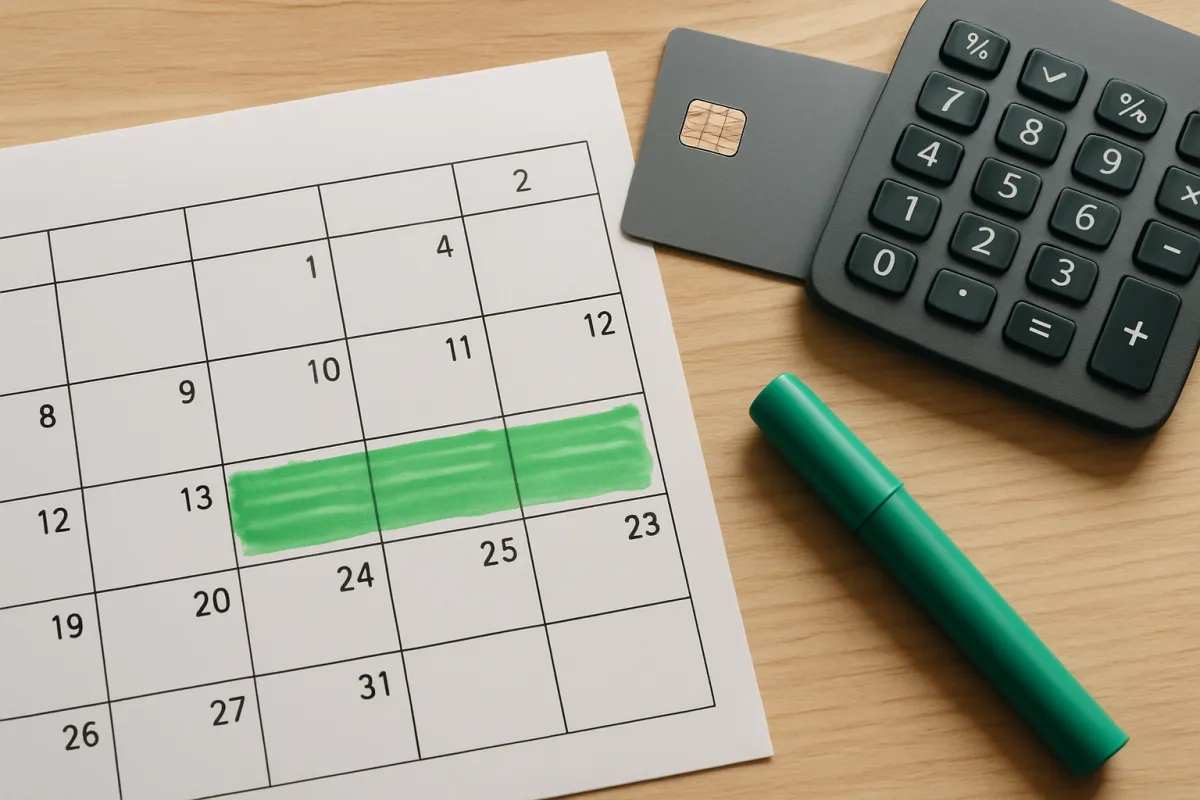
An illustrative case: a notice dated the 2nd reaches you on the 6th, and you sit down on the 10th. You are four days into the process, and if the window described on the notice is 30 days you have 26 left. Watch out for the very common mistake of treating the day you opened the envelope as day one. The validation timing helper on this page turns those dates into the number that matters, which is how long you have to get the letter in the post.
Step 2: Decide what you are asking the collector to prove
Before you write a word, decide what a satisfying answer would look like, because a request for everything tends to produce nothing. Three items cover almost every case, and they are the three that actually decide whether you owe this company money.
The first is the amount. Ask for the balance claimed and how it was arrived at, meaning the original principal and what has been added since. Collection balances routinely include interest and fees accumulated after the original account went bad, and a figure that has grown a long way from what you remember is a legitimate thing to query.
The second is the original creditor. Ask for the name and address of the company you originally dealt with, and the account number you had with them. This is how a debt you genuinely do not recognise becomes recognisable, or stays unrecognisable in a way that tells you something. A collector who cannot connect its reference number to a creditor you ever had a relationship with has a problem.
The third is authority. Ask for documentation that this collector owns the debt or is authorised to collect it on someone else’s behalf. Debts change hands, and the company writing to you may be several steps removed from the lender. This is the item that most often exposes a broken chain.
Resist the urge to add more. Circulating templates demand signed contracts, licensing details, sworn statements, and payment histories going back years, and piling those on does not strengthen the request. It makes it look like a form letter and gives a collector a reason to treat the whole thing as boilerplate. Three specific questions, asked plainly, are harder to brush aside than twenty.

Step 3: Write the validation letter
Now write it, and keep it under a page. The tone that works is the tone of a business letter from someone who is neither frightened nor combative. You are not arguing, you are asking, and a short letter is harder to dismiss than a long one.
Open with the identifying details: your full name and mailing address, the collector’s name and address exactly as printed on their notice, the date, the account or reference number they used, and the date of the notice you are responding to. Then a single sentence that does the legal work: you dispute this debt and you are requesting validation of it. Then the three items from Step 2, as a short list. Then one closing request, that further communication about this account come to you in writing at the address above. Sign it and date it.
What you leave out is as important as what you put in. No apology. No explanation of why you fell behind. No mention of what you could afford. No settlement offer, however tentative. No payment, not even a small one, because a payment can be read as acknowledging the debt and, in many places, acknowledging an old debt can affect how long it stays collectible. That timing question is genuinely specific to where you live, so if the debt is old, treat it as a matter for a consumer attorney rather than for your own letter.
An illustrative shape: seven or eight sentences, a three-item list, your signature. Watch out for the temptation to be clever. Language borrowed from online templates that threatens consequences or recites rules you have not verified undercuts an otherwise clean request, and there is nothing to gain from it.
Step 4: Send it by a method you can prove
A validation letter you cannot prove you sent is close to worthless, because the whole value of the exercise is the record. Before it leaves your hands, make a complete copy of exactly what you are sending, including the list and the signature, and put the copy in the file.
Send it by a method that generates independent evidence of dispatch and delivery. In practice that means a mail service that gives you a receipt when you send it and a record when it arrives, so you hold two dated facts that do not depend on the collector agreeing with you. Keep the receipt and the delivery record stapled to your copy of the letter. If you send by any other route, keep whatever confirmation that route produces, and understand that a plain posted letter with no tracking leaves you asserting a date rather than proving one.
Allow time for delivery inside your window. An illustrative five days of transit is not unreasonable to plan around, and building that margin in is why the drafting should not drift. Note the delivery date in your log when the confirmation arrives, because that date, not the date you signed the letter, is what you will point to later.
How an illustrative 30-day window gets used
One illustrative plan: three days to gather and draft, five days allowed for delivery, and the rest as margin. Your own notice defines the real window.
Eight of the thirty days do real work. The remaining twenty-two are slack you only have if you start early, which is the entire argument for acting the week the notice arrives.
Step 5: Read the response and decide the next move
Something will come back, or nothing will, and each of those is information. When a package arrives, read it against the three questions you asked rather than against how official it looks. A thick envelope of printouts that never names the original creditor has not answered you. A single clear statement that names the creditor, shows the balance and how it was built, and documents the collector’s authority has.
Sort the outcome into one of four buckets. The response answers all three questions, in which case the debt is probably provable and your attention moves to what to do about it. The response answers some and dodges others, in which case write once more, politely, naming only the gap. The response is plainly wrong, showing a different name, a different address, an amount that does not reconcile, or an account you can show was paid or settled, in which case you have a documented accuracy problem worth pursuing. Or nothing arrives at all, which is its own section below.
Whatever the outcome, add the response and the date it arrived to the file. An illustrative wait of three weeks is a reasonable planning assumption, though there is no guarantee attached to it and some collectors reply quickly while others go quiet for months. Watch out for reading a confident cover letter as validation. The question is not whether the collector sounds sure, it is whether the three items are in front of you.

What a collector is generally expected to produce
It helps to know roughly what a real validation response looks like, so you can tell an answer from a gesture. In general terms, the collector is expected to verify the debt it is claiming rather than to hand over a complete archive, and the practical output is usually documentation identifying the amount owed and the creditor the debt originated with.
That is a lower bar than many people expect. Some templates circulating online insist a collector must produce a signed original contract, a full transaction history, and evidence of its licensing before it may say another word, and readers who send those letters sometimes conclude that a collector who supplies less has failed. That is not a safe assumption to act on. Verification and a complete evidentiary file are different things, and a collector can meet a verification request with materially less than a lawyer would want at trial.
What this means for you is practical. Judge the response on whether it answers the three questions well enough that you now know who you owed, what the figure is built from, and who is entitled to collect. If it does, you have what the request was for, even if it is thinner than you hoped. If it does not, say exactly which of the three is missing rather than restating a maximal list. Precision reads as substance, and it also keeps you honest about what you are actually entitled to expect.
What happens while the request is pending
The mechanism commonly described in consumer guidance is a pause. Once you have disputed the debt in writing inside the window and requested verification, the collector is generally expected to stop collection activity on that account until it provides what you asked for. That is why the timing in Step 1 matters so much: the pause is the practical benefit of writing early, and it is why a request sent inside the window is worth more than the same words sent two months later.
Do not over-read the pause. It applies to the account you disputed and does not extend to other debts, other collectors, or a lawsuit already in motion. Contact does not always stop instantly, because internal systems and outsourced call centres lag. And a pause is not a cancellation; it is a hold that ends when the verification arrives, at which point collection can resume.
If contact continues in a way that looks like collection pressure rather than a response to your letter, the useful reaction is documentary rather than emotional. Log the date, the channel, and what was said, and keep the delivery confirmation showing when your request landed. That record is the thing that makes a complaint or a later conversation with a consumer attorney worth having. The Consumer Financial Protection Bureau is the place to check what the current expectations actually are and to raise a complaint if you need to, and this rundown is not a substitute for either that or advice about your own account.
Validation is not the same as a credit bureau dispute
These two get conflated constantly, and the confusion costs people time. A validation letter goes to the collector and asks it to prove the debt before collecting. A credit bureau dispute goes to the credit reporting companies and asks them to investigate the accuracy of something appearing on your file. Different recipient, different question, different result.
Sending a validation letter does not, by itself, make anything happen at the bureaus. If a collection account is on your reports and you want that addressed, that is a separate letter to a separate organisation, and our rundown on how to dispute a credit report error walks that process. Equally, winning a bureau dispute does not settle whether you owe the money; it settles how the account is reported.
In practice the two often run in sequence. Validation first, because it establishes whether the debt is provable and by whom, and a bureau dispute after, because you then know what the inaccuracy actually is and can describe it specifically. A dispute that says the account is wrong is weak. A dispute that says the account is reported by a company that could not identify the original creditor when asked in writing on a named date is a different document. If you are not sure what is even on your file yet, our rundown on reading your credit report is the place to start.
What a validation letter cannot do
Being clear about the limits protects you from the disappointment that makes people give up on a process that was working. A validation letter does not erase a debt. It does not make an account fall off your credit reports. It does not stop a debt from being sold on to another company. It does not extend or shorten how long a debt can be pursued where you live. And it is not a technicality that voids an obligation because a collector answered imperfectly.
The strongest claim you can safely make is the one this rundown keeps repeating: if a collector cannot verify a debt, it is generally expected to stop collecting on it until it can. That is meaningful, and it is not deletion. A debt that goes unvalidated today can be validated next month, or transferred to a company with a better file, or simply continue to sit on a credit report while nobody collects on it.
There is a whole genre of advice built on the opposite promise, usually attached to a fee. Treat any claim that a particular form of words forces an automatic deletion as marketing rather than method. Our rundown on debt settlement covers the costs and risks of the paid version of that promise. The realistic goal here is information and a record, and those are worth having on their own terms.
The letter, line by line
Set out as a structure rather than a script, so you write your own words rather than posting a recognisable template.
- Your details. Full name and mailing address, at the top. Use the address you want their reply to reach.
- Their details. Company name and address copied exactly from their notice, including any department or reference line.
- The date. The day you sign it, not the day you started drafting.
- The account line. Their reference or account number, quoted exactly, plus the date of the notice you are answering.
- The dispute sentence. One plain sentence stating that you dispute this debt and request validation of it.
- The three requests. A short list: the amount claimed and how it was calculated; the name and address of the original creditor and your account number with them; documentation of this collector’s authority to collect the account.
- The communication line. A request that further contact about this account be made in writing to the address above.
- The close. A neutral sign-off, your signature, and your printed name.
Nothing else belongs in it. In particular, no sentence beginning with a version of the words “I know I owe”, no reference to what you could pay, and no enclosure other than the letter itself.
Mail, email, or the collector’s portal
The channel decides how good your evidence is, so it is worth a moment rather than a shrug.
Physical mail with delivery tracking is the strongest ordinary option, because the proof of sending and the proof of arrival come from a third party rather than from either you or the collector. It is slower and it costs a little, and both of those are the price of the record. This is the default for a reason.
Email is fast and it gives you a timestamped copy in your own sent folder, which is real evidence, but it depends on the address being one the collector monitors and treats as valid for disputes. A dispute sent to a general enquiries inbox may not be routed as a dispute at all. If you use email, keep the full message including headers, and consider following with a posted copy so the file has both.
A collector’s own web portal is the weakest of the three for this purpose, because the record lives on their system and you may not be able to retrieve it later or prove what the form said when you filled it in. If a portal is the only route offered, screenshot every screen before submitting and save the confirmation, then send a posted copy anyway. Whatever the channel, the test is the same: could you show an uninvolved person what you sent and when it arrived, using something other than your own memory?
A worked example: an illustrative $3,200 collection notice
One run through the five steps with numbers attached, so the shape is concrete. Every figure is illustrative and chosen to show the mechanics rather than to describe any real account.
The situation: a letter arrives claiming you owe $3,200 to a company you have never heard of, on what it describes as an old card account. The notice is dated the 2nd. It reaches you on the 6th. It states a 30-day window to dispute the debt.
Step 1, the date. You log the notice date, the delivery date, and the window. Sitting down on the 10th, you are four days in, which leaves 26 days. You start a file with the notice, the envelope, and a contact log.
Step 2, the ask. You decide on the three questions: how the $3,200 was built from an original principal, who the original creditor was and what your account number with them was, and what gives this company the right to collect.
Step 3, the letter. You write eight sentences and a three-item list, with your details, their details, the reference number, one dispute sentence, and a request for written contact. You draft it over three days of gathering, which is about 10 percent of the window.
Step 4, sending. You copy the signed letter, send it by tracked mail allowing five days for delivery, about 17 percent of the window, and file the receipt. That leaves 22 days of margin, roughly 73 percent, which is comfortable. Because you started on the 10th, you needed it in the post within 21 days to keep the five-day allowance intact.
Step 5, the response. Three weeks later a reply arrives naming the original creditor and showing $2,450 of principal with $750 added since, which reconciles to the $3,200 claimed. The debt is real, and your attention moves to what to do about it. Change any input, a later start date or a shorter window on your own notice, and the margin shrinks fast. Run your own dates through the validation timing helper to see where yours lands.
Common mistakes when requesting validation
The errors that turn a straightforward request into a wasted one, gathered so you can skip them.
- Missing the window. The single most common failure is delay, not difficulty. The letter takes an hour; the window does not wait. Work from the notice date, not the day you got round to it.
- Admitting the debt while asking about it. A sentence acknowledging the debt, or a small payment sent as a gesture, can undercut the request and, for older debts, can matter in ways that vary by where you live. Ask; do not concede.
- Calling instead of writing. A phone call leaves you with a memory. Nothing said on a call is the documentation you asked for, no matter how detailed the representative sounds.
- Sending a maximal template. Long lists of demands lifted from the internet read as boilerplate and invite a boilerplate answer. Three specific questions are stronger than twenty generic ones.
- Sending it untracked. Without proof of dispatch and delivery you are asserting a date rather than proving one, which is exactly the weakness the exercise was meant to remove.
- Believing an unanswered request deletes the debt. It does not. Silence is leverage and evidence, and treating it as a cancellation leads people to ignore an account that is still very much alive.
- Skipping the copy. Not keeping an exact copy of what you sent makes the whole file half a file. Copy first, send second.
Each of these is avoided by the same two habits: start early, and keep everything.

Troubleshooting: when validation goes sideways
A handful of situations come up often enough to plan for.
The response is partial. It names the creditor but never explains the amount, or explains the amount but never shows authority. Write once more, short, naming only the missing item and referring to the date of your first request and its delivery confirmation. One precise follow-up is worth more than a second full letter.
The response is unreadable. Some collectors reply with dense printouts that could mean anything. You are entitled to ask what a document is meant to show. Ask specifically, in writing, and keep the exchange.
Collection contact continues. Log every instance with date, channel, and content, and hold it alongside your delivery confirmation. That record is what makes a complaint to the Consumer Financial Protection Bureau or a conversation with a consumer attorney productive.
A different company writes about the same debt. This happens when a debt is transferred, and the practical answer is to start the process again with the new company on its own timeline, because your earlier letter was addressed to someone else. Keep both files together, because the chain itself may be useful.
You are served with a lawsuit. At that point the self-help in this rundown is no longer the right tool. Deadlines attach to a legal filing and ignoring one can go badly. That is a moment for a consumer attorney, promptly, not for another letter.
If the collector never responds
Silence is the outcome people find hardest to interpret, because it feels like a win and is not quite one. What you have is a documented request, delivered on a date you can prove, that went unanswered. In the mechanism commonly described, that means the collector is not expected to keep collecting on the account until it provides verification.
What silence does not do is remove the debt or clean your credit reports. The account can sit there, unpaid and uncollected, until something changes. It can be sold to another company that starts fresh. It can be validated later if the file catches up. Treating a non-response as a closed matter is how people are surprised a year later.
The productive moves are all about the record. Keep the delivery confirmation and your copy of the letter indefinitely. Check your credit reports to see whether the account is being reported and how, which our rundown on reading your credit report covers. If it is reported and the collector could not verify it when asked, that is a specific, dateable fact to put into a bureau dispute rather than a vague objection. And if the account is old enough that timing questions arise, that is genuinely a matter for a consumer attorney in your area rather than for a general article.
If the debt turns out to be yours
Often it is, and that is not a failure of the exercise. You now know who the original creditor was, what the balance is made of, and who is entitled to collect, which is a much better position than the one the first notice left you in. What you do next is a separate decision, and it is not one this rundown can make for you.
The usual routes from here are paying it, arranging to pay it over time, or attempting to settle it for less than the balance. Our rundown on negotiating with debt collectors covers the settlement route step by step, including the discipline of getting terms in writing before any money moves. If the account is one of several, the wider sequencing question matters more than any single negotiation, and our get-out-of-debt playbook covers that. If the balance grew after the original account went bad, our note on what a charge-off is explains how an account gets to this stage.
Two cautions carry across all of those. Anything you agree should be in writing before you pay, and a forgiven balance can carry tax consequences that are specific to your circumstances. Both are reasons to slow down at exactly the point where a collector will want you to speed up.
If the debt is not yours at all
Sometimes the response makes it clear that the collector has the wrong person or the wrong account, and this is where the paper trail earns its keep. Mistaken identity is common with shared surnames, former addresses, and family members with similar names, and it usually resolves once you can show the mismatch in writing.
Reply, in writing, stating plainly that the account is not yours and identifying the specific mismatch: a name that is not yours, an address you never held, an original creditor you never had an account with, dates that do not fit. Keep it factual and keep a copy. Ask that the account not be reported to the credit bureaus as yours, and check your reports to see whether it already has been.
If the pattern suggests identity theft rather than a clerical mix-up, meaning accounts you never opened, addresses you do not recognise, or several unfamiliar debts at once, the response needs to be broader than one letter. That is the point to look at locking down new credit, and our rundown on how to freeze your credit explains that mechanism. The Consumer Financial Protection Bureau and the Federal Trade Commission both publish current guidance on identity theft, and a consumer attorney is the right call if the volume or the amounts are significant.
Where validation sits next to your other moves
Validation is the pre-step, and its place in the order is the whole reason to bother with it. Negotiating a settlement assumes the debt is established. Getting a collection removed from your reports assumes there is something specific to challenge about how it is reported. Both of those start from a position validation is what establishes.
Run in the right order, the sequence is: establish whether the debt is provable and by whom, then decide how to resolve it, then address how it appears on your credit file. Run in the wrong order, you can find yourself negotiating a balance nobody could have proven, or filing a bureau dispute you cannot substantiate because you never asked the collector anything.
That said, validation is not always the right first move. If you already know the debt is yours, have documentation of it, and simply want it resolved, the request buys you information you already hold. If you have been sued, the letter is not the priority. If the account is one of many and the real problem is total debt load rather than one collector, the sequencing question in our get-out-of-debt playbook matters more. Use the validation timing helper to see how much room the window leaves you, then decide whether this is the step your situation actually needs.
Keeping the file after the matter closes
Whatever the outcome, the file outlives it, and people who throw it away tend to regret it. Collection accounts resurface. They get sold, re-reported, and occasionally revived by a company with no knowledge of what came before. The only thing that shortens those conversations is the folder you kept.
Keep, together and indefinitely: your copy of the letter, the dispatch receipt, the delivery confirmation, the collector’s response or the absence of one, your contact log, and any later correspondence. Scan the paper so a single spilled drink cannot undo it, and store the scans somewhere you will still have access to in several years, which usually means not only on one laptop.
Then set a reminder to check your credit reports a few months on. The question is whether the account is reporting, and whether it is reporting the way the outcome says it should. If it is not, the file you kept is exactly the evidence a bureau dispute runs on, and our rundown on disputing a credit report error covers the mechanics. A validation request is finished when it is sent, answered or not, filed, and confirmed against your reports.
Your debt validation checklist
Save this and work it in order.
- Found the collector's first written notice and logged both the date on it and the date it reached me.
- Read the notice's own statement of the dispute window and the date it runs from.
- Opened a file for this account with the notice, the envelope, and a running contact log.
- Decided the three things to ask for: the amount and how it was calculated, the original creditor, and this collector's authority to collect.
- Wrote a short factual letter with no admission, no offer, no payment, and no explanation of my finances.
- Made an exact copy of the signed letter before sending it.
- Sent it by a method that produces independent proof of dispatch and delivery, allowing time for transit inside the window.
- Filed the receipt and the delivery confirmation with my copy.
- Read any response against the three questions rather than against how official it looked.
- Logged the outcome, kept everything, and set a reminder to check my credit reports later.
The bottom line
A debt validation letter is five steps and about an hour of work: date the collector’s first notice, decide what you want proven, write a short factual request for the amount, the original creditor, and the collector’s authority, send it by a method you can prove, then read what comes back. The window is defined on your own notice, and starting the week it arrives is what turns a tight deadline into a comfortable one.
Hold the limits as firmly as the method. Validation establishes whether a debt is provable, which is genuinely useful, and it does not erase a debt, delete a credit report entry, or end the matter by itself. A collector that cannot verify is generally expected to pause, not to disappear. Run your dates through the validation timing helper, keep every piece of paper the exercise generates, and take the specifics of your own account to the Consumer Financial Protection Bureau or a consumer attorney rather than to any general article, this one included.
BorrowLane publishes educational material only and is not a law firm, a debt collection agency, or a credit repair service, and nothing in this rundown is legal, tax, or financial advice. The dispute window, the pause on collection activity, and what a collector must produce are described here as the mechanism consumer guidance commonly sets out, not as a statement of the rules that govern your account, and those rules change over time and can differ depending on the debt and where you live. Every day count, dollar figure, and response time above is illustrative rather than a prediction, and an unvalidated debt is not automatically cancelled or removed from your credit reports. Take your own notice, your own dates, and any account involving a lawsuit or suspected identity theft to the Consumer Financial Protection Bureau or a qualified consumer attorney before you act.
Frequently asked questions
How do you send a debt validation letter step by step?
Five steps. Write down the date the collector's first notice reached you and open a file for the account. Decide exactly what you want the collector to prove, which is usually the amount, the name of the original creditor, and this collector's authority to collect on that account. Write a short, factual letter that requests those things and admits nothing. Send it by a method that produces independent proof of what you sent and when it arrived. Then read whatever comes back and decide your next move on the strength of it. Most of the work is in the first two steps, because a letter written from a proper file is quick to draft. Nothing here is legal advice, and consumer protection rules can change and vary, so confirm your own situation with the Consumer Financial Protection Bureau or a consumer attorney.
What should a debt validation letter include?
Keep it short and factual. Include your name and mailing address, the collector's name and address, the account or reference number exactly as it appears on their notice, the date of their notice, and a plain sentence saying you dispute the debt and request validation. Then list what you want them to produce: the amount claimed and how it was calculated, the name and address of the original creditor, and documentation of this collector's authority to collect the account. Ask that further contact about the account come to you in writing. Do not include an apology, a promise to pay, a partial payment, a settlement offer, or a detailed story about your finances. Sign it, date it, and keep an exact copy of what you sent.
How long do I have to send a debt validation request?
The notice you received should state the window and the date it runs from, and reading that notice is more reliable than any figure you find online. The window commonly described in consumer guidance is 30 days from the collector's first communication about the debt, which is why the illustrative timeline in this rundown uses 30 days. Treat that as the widely described mechanism rather than as a rule confirmed for your account, because collection rules change over time and your notice governs your situation. If the window has already closed you can usually still write and ask for verification, but the protections that attach inside the window may not apply. Check the current position with the Consumer Financial Protection Bureau or a consumer attorney.
What happens if a debt collector cannot validate the debt?
The commonly described outcome is that the collector is expected to stop collection activity on that account until it can provide the verification you asked for. That is not the same thing as the debt being erased. An unvalidated debt does not automatically disappear, is not automatically deleted from your credit reports, and can sometimes be validated later or sold on to another collector who starts the process again. What silence does give you is a documented record that you asked and they did not answer, which is useful if the account keeps appearing or if you later dispute how it is reported. Treat a non-response as leverage and evidence, not as a cancellation.
Does sending a validation letter hurt my credit score?
Sending the letter itself is a piece of correspondence between you and the collector, not a credit application, so the act of writing does not create an inquiry or a mark of its own. What can change your reports is what the request uncovers. If the collector cannot verify the account and it comes off your reports, that is a change caused by the underlying accuracy problem rather than by your letter. If the account is verified, it generally keeps reporting as it was. Some collectors are expected to mark an account as disputed while a dispute is open, and how any given scoring model treats that flag varies, so treat predictions about score movement as illustrative rather than as a forecast for your file.
Is a debt validation letter the same as a credit bureau dispute?
No, and mixing them up is a common and costly error. A validation letter goes to the collector and asks the collector to prove the debt before it collects. A credit bureau dispute goes to the credit reporting companies and asks them to investigate something that is being reported about you. They run on different tracks, involve different recipients, and produce different outcomes. Many people end up doing both, in that order, because validation establishes whether the debt is provable and a bureau dispute addresses how it appears on your reports. Our rundown on disputing a credit report error covers the second track in detail.
Should I call the collector instead of writing?
Writing is the safer route for a request like this, because a phone call leaves you with your own memory and the collector with theirs. A written request produces a dated copy you control, and a written reply produces something you can actually examine. A phone representative reading account details aloud is not the documentation you asked for, however confident they sound. Calls also invite you into unscripted conversation where a casual sentence about paying can carry more weight than you intended. If a call happens anyway, note the date, the time, the name given, and what was said, and follow up in writing with what you understood.
Can I use a validation letter template I found online?
A template is a reasonable starting frame, but many circulating templates are padded with aggressive language, invented demands, and citations that do not help you and can make a straightforward request look like a form letter. A short, specific, polite request naming the account and asking for the amount, the original creditor, and proof of the collector's authority tends to work better than a long one making demands the collector has no obligation to meet. Strip any template down to what you actually want proven, put your own account details in it, and remove anything you cannot stand behind. If your situation involves a lawsuit, identity theft, or a large balance, have a consumer attorney look at the letter instead.

Hamza Hai is the editor of BorrowLane. She holds an MBA and reviews the site's articles against our editorial standards, checking that every figure is labelled for what it is, that nothing is presented as verified fact without a source the reader can check, and that the writing stays useful to a non-specialist.